

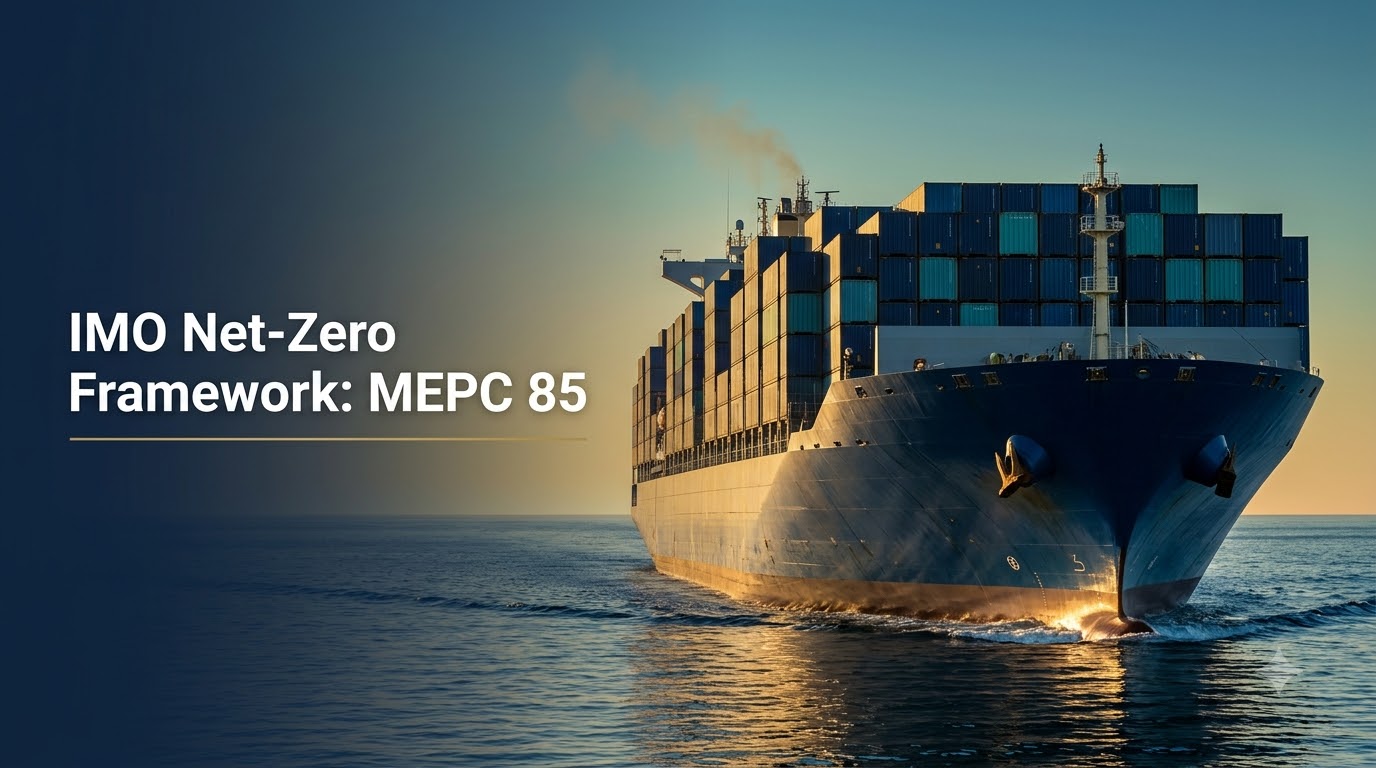
IMO Net-Zero Framework Explained: What MEPC 85 (Dec 2026) Could Decide for Shipping and Seafarers
Last Updated: October 2026 · By V.K. Singh, Fleet Frontier
This article reflects the status as of late October 2026, before MEPC 85. IMO decisions can change quickly. Always verify the latest position on the IMO website and DG Shipping notices.
The IMO Net-Zero Framework is a proposed set of global rules to cut greenhouse gas (GHG) emissions from ships. It would combine a mandatory fuel standard with a price on emissions. As of October 2026, it is not yet adopted and not in force. The key decision point is MEPC 85 in London, from 30 November to 3 December 2026.
In this guide, you will learn what the framework is, how GHG Fuel Intensity (GFI) works, how ships would comply, why countries disagree, what India has said, and what it could mean for Indian cadets, engineers, officers and ratings.
Quick Answer: Is the IMO Net-Zero Framework in force?
No. The IMO Net-Zero Framework was approved as draft amendments to MARPOL Annex VI in April 2025, but formal adoption was adjourned in October 2025. MEPC 84 (April–May 2026) kept it as the basis for talks. Member States may decide at MEPC 85 (30 Nov–3 Dec 2026). If adopted, entry into force would follow about 16 months later.
IMO Net-Zero Framework at a Glance
| Item | Current position (Oct 2026) |
|---|---|
| Legal home | New Chapter 5 of MARPOL Annex VI (draft) |
| Status | Approved as draft; not adopted |
| Ships covered | Ocean-going ships above 5,000 GT |
| Main measure 1 | Global fuel standard (GFI limit) |
| Main measure 2 | Global economic measure (emissions pricing) |
| Next decision | MEPC 85, 30 Nov–3 Dec 2026 |
| Earliest entry into force | 16 months after adoption (2028 at the earliest) |
What Is the IMO Net-Zero Framework?
The International Maritime Organization (IMO) is the UN agency that writes global shipping rules. Its Marine Environment Protection Committee (MEPC) handles pollution and climate rules.
The Net-Zero Framework is IMO’s “mid-term measure” to deliver its 2023 IMO GHG Strategy. That strategy aims for net-zero GHG emissions from international shipping by or around 2050. It also sets a goal that zero or near-zero emission fuels and technologies provide at least 5%, striving for 10%, of the energy used by international shipping by 2030.
The framework has two pillars:
- Global fuel standard — every ship must reduce its annual GHG Fuel Intensity (GFI) step by step.
- Global economic measure — ships above the GFI limits must pay for their deficit, while ships using zero or near-zero fuels can earn rewards.
IMO describes it as the first scheme in the world to combine mandatory emission limits and GHG pricing across a whole industry sector.
Why it matters for Merchant Navy careers
Shipping runs mostly on heavy fuel oil and marine gas oil today. A binding global fuel standard would push owners towards LNG, biofuels, methanol, ammonia and other options. That changes engine rooms, bunkering procedures, safety systems and the training seafarers need.
Timeline: From MEPC 83 to MEPC 85
| Date | Meeting | What happened |
|---|---|---|
| 7–11 Apr 2025 | MEPC 83 | Draft framework approved as MARPOL Annex VI amendments |
| Oct 2025 | MEPC/ES.2 (extraordinary session) | Adoption vote adjourned for one year |
| 27 Apr–1 May 2026 | MEPC 84 | Framework kept as basis for talks; intersessional work agreed |
| 1–4 Sep 2026 | ISWG-GHG 22 | Ended without agreement on key issues |
| 23–27 Nov 2026 | ISWG-GHG 23 | Final intersessional round (scheduled) |
| 30 Nov–3 Dec 2026 | MEPC 85 | Decision point on the way forward |
| 4 Dec 2026 | MEPC/ES.2 resumes | Possible adoption, subject to MEPC 85 |
At the close of MEPC 84, IMO Secretary-General Arsenio Dominguez said: “We are back on track, but we have to rebuild trust.” Nearly 100 delegations spoke on the framework during that session.
Which Ships Would Be Covered?
The draft rules apply to large ocean-going ships above 5,000 gross tonnage (GT). According to IMO, these ships produce about 85% of total CO₂ emissions from international shipping.
In practice, this includes most vessels Indian officers sail on:
- Container ships
- Bulk carriers
- Oil tankers and chemical tankers
- LNG and LPG carriers
- Car carriers and large general cargo ships
- Cruise ships
Smaller vessels, such as many offshore support vessels, tugs and coastal ships under 5,000 GT, fall outside the current draft. Some delegations have discussed wider coverage later, but that is not part of the approved text.
What Is GHG Fuel Intensity (GFI)?
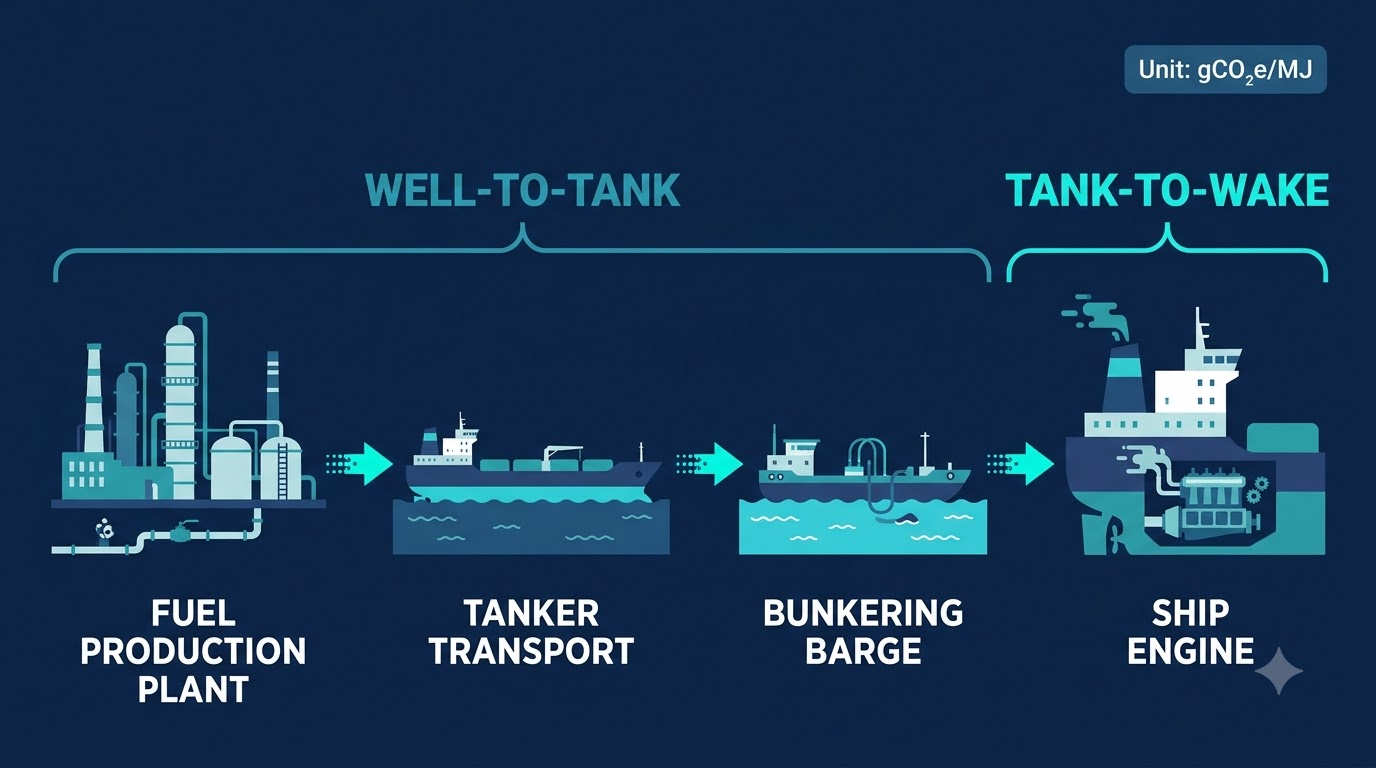
GFI is the amount of greenhouse gas a ship emits for each unit of energy it uses. It is measured in grams of CO₂-equivalent per megajoule (gCO₂e/MJ).
GFI counts all major greenhouse gases — CO₂, methane (CH₄) and nitrous oxide (N₂O). Methane and N₂O are converted into CO₂-equivalent because they trap more heat per tonne.
Well-to-wake: the full fuel life cycle
GFI uses a well-to-wake approach. It has two parts:
| Stage | What it covers | Example |
|---|---|---|
| Well-to-tank | Producing, processing and transporting the fuel | Refining crude, making methanol, shipping LNG |
| Tank-to-wake | Burning the fuel on board | Main engine and generator emissions, methane slip |
This matters because a fuel can look clean at the funnel but be dirty in production. For example, methanol made from natural gas has a very different life-cycle footprint from methanol made with renewable electricity. Fuel suppliers would need recognised certification to prove these values.
Simple example (illustrative only)
Imagine a bulk carrier burning only very low sulphur fuel oil. Its GFI is roughly fixed by that fuel’s life-cycle emissions. If the year’s target is lower than that value, the ship has a deficit. To reduce the deficit, the owner could blend biofuel, switch part of the voyage to a lower-carbon fuel, or buy compliance units. These numbers are not given here because final target values may still change.
How Would Ships Comply?
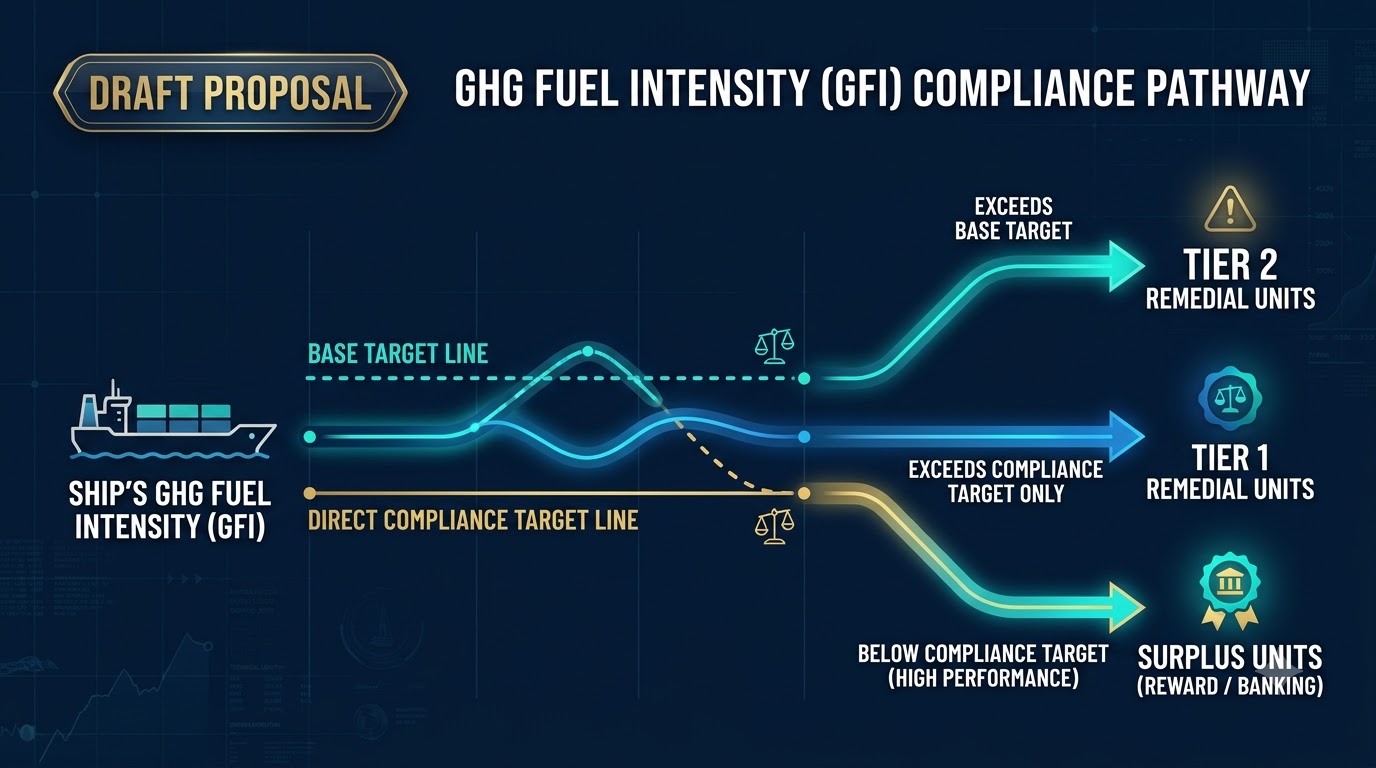
The draft sets two GFI levels each year:
- Base Target — the minimum every ship must meet.
- Direct Compliance Target — a stricter level. Ships that beat it earn surplus units.
As reported from the draft text, required reductions start in the range of about 4–17% in 2028 and tighten to about 30–43% by 2035. These figures belong to the draft and may be amended.
| Ship’s annual GFI | Result | What the owner does |
|---|---|---|
| Below Direct Compliance Target | Surplus | Earns surplus units (bank or transfer) |
| Between the two targets | Tier 1 deficit | Uses surplus units or buys Tier 1 remedial units |
| Above Base Target | Tier 2 deficit | Covers Tier 1 part plus Tier 2 remedial units |
A ship with a deficit can balance it by:
- Transferring surplus units from another ship
- Using surplus units it banked earlier
- Using remedial units bought through contributions to the IMO Net-Zero Fund
What would the carbon price be?
Industry reporting widely cites draft remedial unit prices of about US$100 per tonne CO₂e for Tier 1 and about US$380 per tonne CO₂e for Tier 2. These are draft proposals, not final law. Some countries, such as Tuvalu, have proposed higher prices, while others want lower costs or no fund at all.
What Is the IMO Net-Zero Fund?
The IMO Net-Zero Fund would collect the money paid for remedial units. Under the draft, it would be used to:
- Reward ships using zero or near-zero GHG fuels and technologies
- Support innovation, research and fuel infrastructure in developing countries
- Fund training, technology transfer and capacity building
- Reduce negative impacts on vulnerable States, such as Small Island Developing States (SIDS) and Least Developed Countries (LDCs)
The fund is the most debated part. Some States see it as essential for a fair transition. Others see it as a global levy and question whether IMO should run it.
How It Fits With EEXI, CII and Regional Rules

The Net-Zero Framework would add to, not replace, existing rules.
| Rule | Scope | Status |
|---|---|---|
| EEXI | Technical design efficiency | In force since 2023 |
| CII | Operational carbon rating (A–E) | In force since 2023 |
| EU ETS (shipping) | Carbon price on EU-related voyages | In force since 2024 |
| FuelEU Maritime | GHG intensity of fuel on EU voyages | In force since 2025 |
| IMO Net-Zero Framework | Global GFI limit + pricing | Draft, not adopted |
For seafarers on foreign-going ships, this means emissions reporting is already part of daily life through the SEEMP, IMO DCS fuel data and CII. The framework would raise the stakes of that data.
Why Has Agreement Been So Difficult?
The disagreement is not about whether shipping should decarbonise. It is about how fast, how much it costs, and who pays.
The main sticking points are:
- The fund’s design and legal nature — whether IMO should collect and spend revenue at all.
- Stringency of long-term targets — how sharply GFI limits tighten after 2030.
- Price levels — whether the draft prices are too high or too low.
- Trade and food security — concerns that freight costs could rise for import-dependent nations.
- Fuel availability — whether enough green fuel will exist by 2030.
- Fair treatment of developing countries — how support reaches SIDS, LDCs and others.
The United States has opposed the framework and called for ending its consideration. Alternative “technical-only” proposals, including one from Liberia, Argentina and Panama and another from Japan, did not win majority support at MEPC 84. At ISWG-GHG 22, analysts reported that about two-thirds of the States that spoke backed a central system for collecting and disbursing revenue.
What Is India’s Position?
India is actively engaged. In 2025, the Directorate General of Shipping (DG Shipping) issued Merchant Shipping Notice No. 4 of 2025, with a guidance note on the framework’s implications for India’s maritime sector. It covers the regulatory timeline, cost implications for Indian shipping and India’s position.
At ISWG-GHG 22 in September 2026, India argued for a balanced and practical approach. It stressed that the transition should be inclusive and should not hit developing countries unfairly.
Estimate, not an official figure: WRI India has estimated compliance costs for Indian foreign-going shipowners at roughly US$87–100 million a year by 2030.
India’s own initiatives, such as Maritime Amrit Kaal Vision 2047, the Harit Nauka guidelines and the National Green Hydrogen Mission, point in the same direction regardless of the IMO outcome.
What Could Happen at MEPC 85?
No outcome is certain. These are the three broad possibilities:
| Scenario | What it means | Next step |
|---|---|---|
| A. Adoption | Text agreed, possibly with small changes | Formal adoption at resumed ES.2; entry into force ~16 months later |
| B. Revised compromise | Major changes agreed in principle | Revised text; adoption likely moves into 2027 |
| C. No agreement | Decision deferred again | More intersessional work; talks continue |
A delay would not cancel the framework. It would only push back the timeline. Some industry bodies, such as BIMCO, have already suggested that talks may continue into 2027.
What It Means for Indian Cadets and Seafarers

Nothing changes on your ship on 4 December 2026. But the direction is clear, and preparing early gives you an edge.
| Role | What to watch | How to prepare |
|---|---|---|
| Engine cadet / Marine Engineer | Dual-fuel engines, methanol and ammonia systems, methane slip | Learn fuel properties, gas fuel systems, IGF Code basics |
| Deck cadet / Navigating officer | Voyage optimisation, fuel reporting, bunkering safety | Understand SEEMP, CII and DCS reporting |
| ETO | Shore power, batteries, automation, fuel monitoring sensors | Build skills in power electronics and monitoring systems |
| GP Rating | Safe handling of new fuels on deck and in engine room | Take toxicity and fire safety awareness seriously |
| Chief Engineer / Master | Compliance records, fuel certificates, audits | Track company fuel strategy and flag-State guidance |
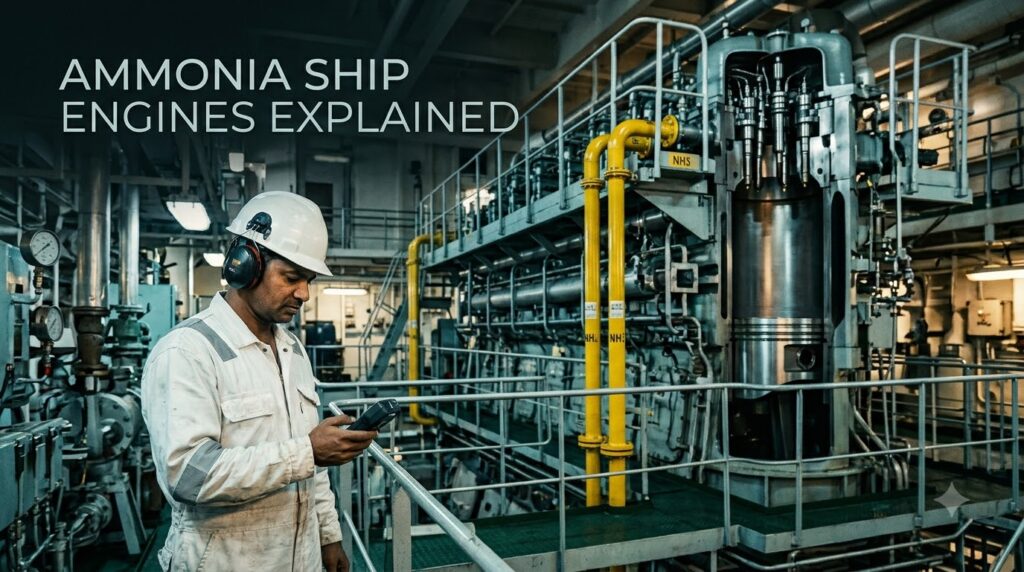
STCW already requires IGF Code training for seafarers on gas-fuelled ships. IMO has also been developing further guidance for training crews on fuels such as methanol, ammonia and hydrogen. Officers with this knowledge are likely to be in demand as fleets renew.
Common Misconceptions
- “The IMO carbon tax has started.” — False. Nothing is in force yet.
- “It bans heavy fuel oil.” — No fuel is banned. High-emission fuels simply cost more to use.
- “It applies to every vessel.” — The draft covers ships above 5,000 GT.
- “A delay means it is dead.” — A delay means negotiations continue.
Conclusion
The IMO Net-Zero Framework is the most important climate rule shipping has ever negotiated. It would set a global GFI limit and put a price on excess emissions for ships above 5,000 GT. But as of October 2026, it remains a draft.
MEPC 85, from 30 November to 3 December 2026, will decide whether it moves to adoption, gets revised, or waits longer. For Indian Merchant Navy aspirants and seafarers, the smart move is to understand GFI, alternative fuels and emissions reporting now — because the industry is moving that way with or without a final vote.
Fleet Frontier will update this article after MEPC 85. Requirements may vary; readers should verify the latest official IMO and DG Shipping notifications.
13. FAQ Section
Publish this on the page as an H2 “Frequently Asked Questions”. The schema below uses the exact same wording.
1. What is the IMO Net-Zero Framework? It is a proposed set of IMO rules to cut greenhouse gas emissions from ships. It combines a global fuel standard based on GHG Fuel Intensity with a pricing mechanism for ships that exceed the limits.
2. Is the IMO Net-Zero Framework adopted? No. It was approved as draft text at MEPC 83 in April 2025, but adoption was adjourned in October 2025. As of October 2026, it is still under negotiation.
3. When is MEPC 85? MEPC 85 is scheduled in London from 30 November to 3 December 2026. The adjourned extraordinary session may resume on 4 December 2026, depending on MEPC 85’s decisions.
4. When would the framework enter into force? Under MARPOL procedure, amendments enter into force about 16 months after adoption. If adopted in December 2026, entry into force would be in 2028 at the earliest.
5. Which ships does the IMO Net-Zero Framework apply to? The draft applies to ocean-going ships above 5,000 gross tonnage. IMO says these ships produce about 85% of CO₂ emissions from international shipping.
6. What is GFI in shipping? GFI, or GHG Fuel Intensity, measures how much greenhouse gas a ship emits per unit of energy used. It is expressed in gCO₂e/MJ and calculated on a well-to-wake basis.
7. What does well-to-wake mean? Well-to-wake covers a fuel’s full life cycle: producing and transporting it (well-to-tank) and burning it on board (tank-to-wake).
8. What are remedial units and surplus units? Ships that beat the stricter target earn surplus units. Ships that miss targets can use surplus units or buy remedial units through contributions to the IMO Net-Zero Fund.
9. What is the proposed carbon price for ships? Industry reports cite draft prices of about US$100 per tonne CO₂e for Tier 1 and about US$380 for Tier 2 deficits. These are draft figures and may change.
10. What is India’s position on the Net-Zero Framework? DG Shipping issued a guidance note through Merchant Shipping Notice No. 4 of 2025. At ISWG-GHG 22, India called for a balanced, practical and inclusive transition that does not unfairly burden developing countries.
11. Will the Net-Zero Framework affect Indian seafarers? If adopted, it would speed up the use of alternative fuels such as LNG, methanol and ammonia. Seafarers would need more training in fuel handling, safety and emissions reporting.
12. Does the Net-Zero Framework replace EEXI and CII? No. EEXI and CII remain in force. The Net-Zero Framework would add a fuel standard and pricing layer on top of them.
Pingback: MARPOL Annex VI Sulphur Cap 2026: 0.50% Rule and Every ECA - Fleet Frontier