

How Ammonia-Fuelled Ship Engines Work: Everllence ME-LGIA and WinGD X52DF-A Explained
Last Updated: October 2026 · By V.K. Singh · Fleet Frontier


Ammonia-fuelled ship engines are no longer a laboratory idea. In 2026, two large two-stroke marine engines moved into real commercial service: WinGD’s X52DF-A and Everllence’s B&W ME-LGIA (Everllence is the new name of MAN Energy Solutions). Both inject liquid ammonia at high pressure into the cylinder, light it with a small shot of diesel pilot fuel, and can switch back to conventional fuel oil.
This guide explains the ammonia fuel system from tank to injector, what happens inside the cylinder, how the exhaust is cleaned, why ammonia is so dangerous to handle, how the two engines compare, and what all this means for Indian marine engineering students, ETOs and cadets.

Quick Answer: What Is an Ammonia-Fuelled Ship Engine?
An ammonia-fuelled ship engine is a dual-fuel, low-speed two-stroke engine that injects liquid ammonia at high pressure into hot compressed air. Ammonia is hard to ignite, so a small diesel pilot injection lights it first (about 5% of energy at full load on WinGD’s X52DF-A). Exhaust after-treatment such as SCR controls NOx.
Why Is Shipping Turning to Ammonia?
Ammonia (NH₃) contains no carbon. When it burns, the main products are nitrogen and water vapour, not CO₂. The real climate benefit, however, depends on how the ammonia is made.
- Grey ammonia is made from natural gas and does not cut lifecycle greenhouse gas emissions.
- Green ammonia is made from hydrogen produced with renewable electricity. WinGD states that renewable ammonia can reduce GHG emissions by up to 90% compared with conventional fuel.
Ammonia also has a practical advantage over hydrogen. It stays liquid at about –33 °C at atmospheric pressure, or at moderate pressure at normal temperatures, and the world already ships it in large volumes for the fertiliser industry.
The downside is energy content. Ammonia carries roughly 18–19 MJ/kg, less than half of heavy fuel oil’s roughly 40–42 MJ/kg (approximate standard values). Ships need much bigger fuel tanks for the same range.
Regulation status (verify before relying on it): The IMO Net-Zero Framework, which would put a global price on shipping GHG emissions, was approved in April 2025. Its adoption was adjourned for one year in October 2025, with a fresh decision expected in late 2026.
Which Ammonia Engines Are in Service in 2026?
| Engine | Designer | First ships | 2026 status |
|---|---|---|---|
| X52DF-A (520 mm bore) | WinGD, Switzerland | EXMAR’s 46,000 m³ LPG/ammonia carrier ANTWERPEN and three sister ships | Sea trials May 2026; ship delivered June 2026 |
| 6G60ME-LGIA (600 mm bore) | Everllence (ex-MAN ES), Denmark | Very Large Ammonia Carriers for Eastern Pacific Shipping, built at HD Hyundai Heavy Industries | Factory test April 2026; type approval test June 2026; first delivery scheduled from October 2026 |
WinGD describes ANTWERPEN as the world’s first ocean-going ship designed to run on ammonia fuel. WinGD has reported around 40 orders for ammonia engines across gas carriers, bulk carriers, tankers and container ships.
Everllence plans to offer the ME-LGIA in G50, S50, S60, G60, G70 and G80 bore sizes, with retrofit options for existing engines. Its type approval test in June 2026 was the final verification before sea trials.
Ammonia Fuel System: From Tank to Injector

Each maker’s design differs in detail, but the overall chain on an ammonia-fuelled ship looks like this:
- Bunker station. Ammonia is loaded through a dedicated, well-ventilated bunker station with emergency shutdown and release couplings.
- Fuel tank. Ammonia is stored either refrigerated (about –33 °C, near atmospheric pressure) or pressurised in IMO Type C tanks. It is refrigerated, not cryogenic like LNG at about –162 °C.
- Fuel supply system. Pumps, filters and a heat exchanger condition the liquid ammonia so it reaches the engine at the correct temperature and pressure, without boiling into vapour.
- Double-walled piping. Every fuel pipe in machinery spaces sits inside an outer pipe. The space between them is ventilated and monitored by gas detectors, so a leak is caught before it reaches the engine room.
- Fuel valve train. Automatic isolation valves cut supply on an alarm, and nitrogen purges the lines before maintenance or after shutdown.
- Vent and purge handling. Ammonia from purging or venting is collected and treated rather than released, because even small amounts are toxic.
- Injectors. Electronically controlled, hydraulically actuated valves inject liquid ammonia at high pressure into the cylinder.
Engine-room example: On a normal gas engine, a small leak alarm may mean ventilating the space. On an ammonia ship, the same alarm also means toxic exposure risk. Crew may need to muster upwind, wear emergency escape breathing devices and follow the ship’s ammonia-specific emergency plan.
What Happens Inside the Cylinder?

Both engines are low-speed, crosshead-type two-stroke engines with uniflow scavenging. Fresh air enters through ports at the bottom of the cylinder liner and pushes exhaust gas up and out through a single exhaust valve in the cylinder cover.
1. Scavenging
Near the bottom of the stroke, the exhaust valve opens first. The piston then uncovers the scavenge ports, and pressurised air from the turbocharger, cooled in the scavenge air cooler, sweeps the cylinder clean.
2. Compression
The piston rises, the ports close and the exhaust valve shuts. The trapped air is compressed until it becomes very hot.
3. Pilot and ammonia injection
Near top dead centre, a small diesel pilot injection ignites first. High-pressure liquid ammonia is injected into this burning pilot flame and hot air, and it catches fire. This is the Diesel (compression-ignition) principle, not the spark-ignited Otto cycle.
4. Power stroke and exhaust
Burning ammonia pushes the piston down and turns the crankshaft through the crosshead and connecting rod. The exhaust then passes through the turbocharger and the after-treatment system.
Why Does Ammonia Need Pilot Fuel?

Ammonia is a poor fuel on its own. It has a high auto-ignition temperature (roughly 650 °C) and a very slow flame speed, several times slower than methane. In a large engine, it simply will not ignite reliably by compression alone.
The pilot fuel solves this. On the X52DF-A, WinGD gives a pilot share of around 5% at full load. WinGD reports that load handling, dynamic response and fuel efficiency are on par with its diesel engines in both modes.
The pilot fuel is still fossil diesel unless a bio or synthetic fuel is used. So an ammonia engine is “near-zero carbon”, not strictly zero.
Emissions: NOx, N₂O and Ammonia Slip
Ammonia mode removes most CO₂, SOx and soot. But nitrogen in the fuel creates three new concerns.
| Emission | Why it matters | How it is controlled |
|---|---|---|
| NOx | Regulated under MARPOL Annex VI (Tier III in emission control areas) | Selective catalytic reduction (SCR); Everllence fits high-pressure SCR (HPSCR) upstream of the turbocharger on the ME-LGIA |
| N₂O (nitrous oxide) | A very powerful greenhouse gas; even small amounts reduce the climate benefit | Combustion tuning and monitoring |
| Unburned ammonia (slip) | Toxic and smelly | Combustion control and after-treatment |
Why Ammonia Is Dangerous on Ships
Ammonia’s biggest challenge is not combustion. It is toxicity.
- Toxic: It attacks the eyes, skin and lungs. A commonly cited 8-hour workplace limit is just 25 ppm.
- Corrosive: It attacks copper, zinc and their alloys, so materials must be chosen carefully.
- Flammable: It burns only in a narrow concentration range, but enclosed spaces still need explosion protection.
- Cold: Liquid ammonia escaping from a pipe can cause cold burns.
The IMO has issued Interim Guidelines for the Safety of Ships Using Ammonia as Fuel (MSC.1/Circ.1687), approved at MSC 109 in December 2024. They are goal-based and non-mandatory, covering ship design, equipment, operations, bunkering, toxicity mitigation and crew protection. Flag states and classification societies apply them case by case.
ME-LGIA vs X52DF-A: Key Differences
| Feature | Everllence ME-LGIA | WinGD X52DF-A |
|---|---|---|
| Engine family | LGI dual-fuel family (ME-LGIM for methanol, ME-LGIP for LPG) | X-DF dual-fuel family; X-DF-A is the ammonia version |
| Ignition principle | Diesel, high-pressure liquid injection | Diesel, high-pressure ammonia injection |
| First bore in service | 600 mm (G60) | 520 mm |
| Pilot fuel | Small diesel pilot | About 5% at full load |
| First ships | Eastern Pacific Shipping VLACs (HHI) | EXMAR mid-size gas carriers (HD Hyundai) |
| Planned range | G50–G80 bores plus retrofits | Wider X-DF-A range under development |
For a student, the key point is this: both engines use the same basic idea. They are electronically controlled two-stroke engines with high-pressure liquid fuel injection and pilot ignition. The differences lie in control systems, fuel supply design and safety arrangements.
Ammonia Mode vs Diesel Mode
| Point | Diesel (fuel oil) mode | Ammonia mode |
|---|---|---|
| Fuel storage | Ordinary tanks at ambient temperature | Refrigerated or pressurised Type C tanks |
| Ignition | Self-ignites on compression | Needs pilot fuel |
| CO₂ from main fuel | Yes | Practically none |
| Main crew hazard | Fire | Toxic exposure and fire |
| Tank space needed | Baseline | Much larger for the same range |
Common Misconceptions
- “Ammonia burns with a green flame.” Many animations colour it green for clarity. That is only a visual aid.
- “Ammonia is cryogenic like LNG.” No. It boils at about –33 °C, far warmer than LNG.
- “Ammonia ships are fully zero-emission.” Not yet. Pilot fuel, N₂O and grey ammonia all add emissions.
What This Means for Indian Marine Engineers, ETOs and Cadets
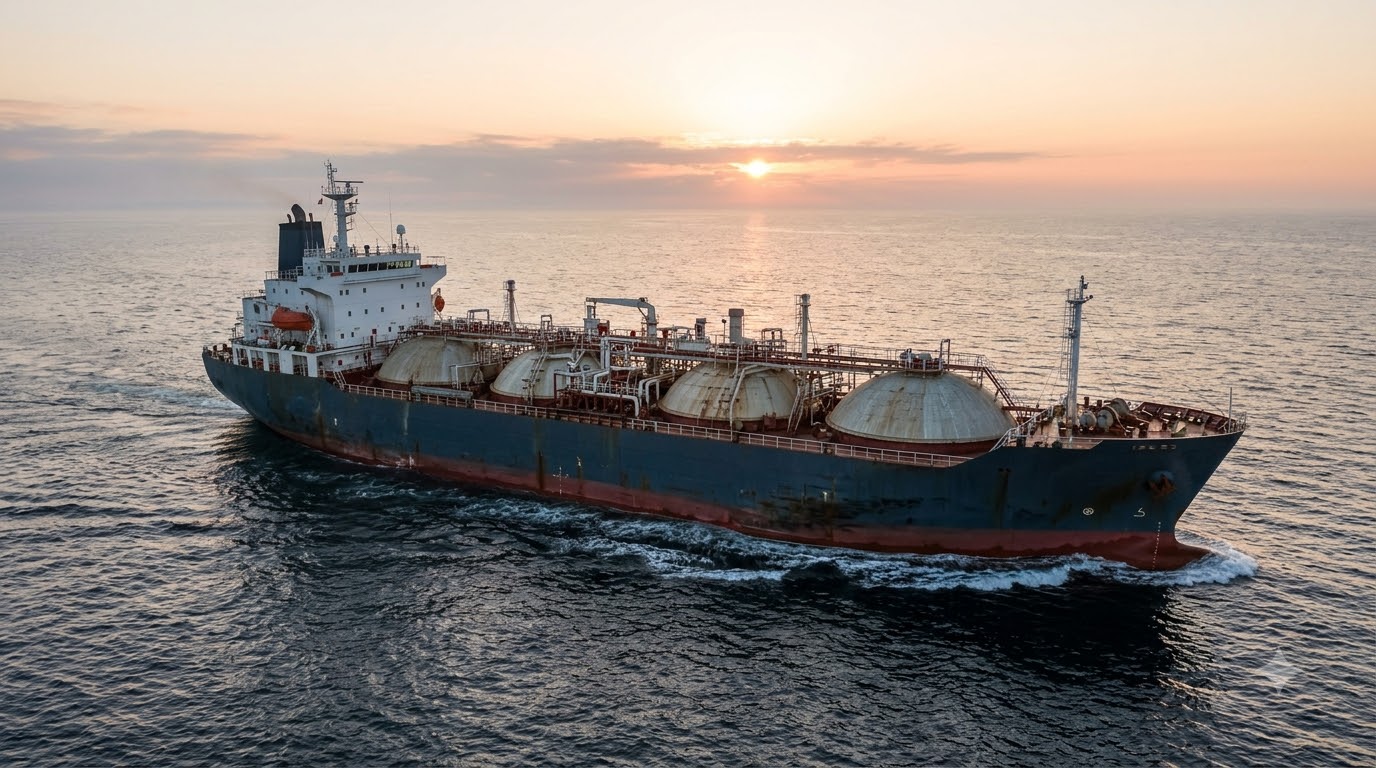
Ammonia ships are arriving in India’s own shipbuilding pipeline. In April 2026, Swan Defence and Heavy Industries at Pipavav, Gujarat, won an order for four 92,500 dwt ammonia dual-fuel bulk carriers, with first delivery planned for October 2029.
In October 2026, India and the EU signed a letter of intent at Sagarmanthan 2026 to explore a green shipping corridor built around Indian green ammonia and methanol, with VOC Port involved. India is also building large green ammonia capacity for export.
Training is still evolving. The IMO approved generic interim training guidelines (STCW.7/Circ.25) for alternative fuels at MSC 110 in June 2025. Ammonia-specific draft training guidelines were finalised at HTW 12 and sent to MSC 111 (May 2026) for approval.
An August 2026 ORF analysis noted that India had yet to incorporate the IMO interim guidelines on ammonia ship safety and seafarer training. At the time of writing, we could not confirm a DG Shipping-approved, ammonia-specific course. Requirements may vary and readers should verify the latest official notification before applying.
Skills worth building now:
- Electronically controlled engines (ME and X-series concepts, common rail, hydraulic actuation)
- Gas and low-flashpoint fuel systems (IGF Code basics, double-walled piping, gas detection)
- SCR systems and emission monitoring
- Toxic gas safety, PPE and emergency response
- For ETOs: gas detection loops, safety PLCs and alarm systems
In interviews for gas carriers or newbuild projects, being able to explain pilot ignition, uniflow scavenging and double-walled fuel piping clearly will set you apart.
Conclusion
Ammonia-fuelled two-stroke engines are now a working reality. The X52DF-A entered service on ANTWERPEN in June 2026, and the ME-LGIA is following on ammonia carriers. Both rely on proven two-stroke design, with high-pressure injection, pilot ignition and strong safety systems.
For Indian cadets and engineers, the message is simple. Learn the fundamentals of dual-fuel engines and toxic-fuel safety now, because ammonia ships will soon need trained crews.
Disclaimer: This article is for education only. It is not an operating manual. Always follow the manufacturer’s instructions, the ship’s Safety Management System, flag state requirements and classification society rules.
13. FAQ section
Place this at the end of the article, before the conclusion or right after it. The schema in section 14 matches these questions word for word.
1. What is an ammonia-fuelled ship engine? It is a dual-fuel two-stroke marine engine that burns liquid ammonia injected at high pressure, ignited by a small diesel pilot injection. It can also run fully on conventional fuel oil.
2. Which is the world’s first ocean-going ammonia-fuelled ship? WinGD describes EXMAR’s gas carrier ANTWERPEN, powered by an X52DF-A engine and delivered in June 2026, as the world’s first ocean-going ship designed to run on ammonia fuel.
3. How much pilot fuel does an ammonia engine use? WinGD states its X52DF-A uses a pilot fuel dose of around 5% at full load. The exact share varies by engine design and load.
4. Is ammonia a zero-emission marine fuel? Not completely. Ammonia itself produces almost no CO₂, but pilot fuel, N₂O, NOx and the way the ammonia is produced all affect total emissions. Green ammonia gives the largest benefit.
5. Why is ammonia dangerous on ships? Ammonia is highly toxic, corrosive to copper and zinc alloys, flammable in a narrow range and stored cold. Leaks can harm crew quickly, so ships need double-walled piping, gas detection and strict emergency procedures.
6. What is the difference between ME-LGIA and X52DF-A? Both are high-pressure, pilot-ignited two-stroke ammonia engines. ME-LGIA is Everllence’s design from its LGI family, first fitted on ammonia carriers for Eastern Pacific Shipping. X52DF-A is WinGD’s design, first fitted on EXMAR gas carriers.
7. At what temperature is ammonia stored on ships? Ammonia is stored either refrigerated at about –33 °C near atmospheric pressure, or pressurised at normal temperature in Type C tanks.
8. Are there IMO rules for ammonia-fuelled ships? Yes. The IMO’s Interim Guidelines for the Safety of Ships Using Ammonia as Fuel (MSC.1/Circ.1687), approved in December 2024, provide a non-mandatory, goal-based safety framework. Mandatory rules are still being developed.
9. Do marine engineers need special training for ammonia-fuelled ships? Yes. IMO generic interim training guidelines for alternative fuels were approved in 2025, and ammonia-specific guidelines have been drafted. Indian seafarers should check DG Shipping for currently approved courses.
10. Will Indian shipyards build ammonia-fuelled ships? Yes. Swan Defence and Heavy Industries at Pipavav won an order in April 2026 for four ammonia dual-fuel bulk carriers, with first delivery planned for October 2029.
11. Can existing ships be converted to run on ammonia? Some can. Everllence plans retrofit options for the ME-LGIA, but conversion also needs new tanks, fuel systems and safety arrangements, so it is a major project.
ammonia marine engine, ME-LGIA engine, WinGD X52DF-A, ammonia dual-fuel engine, ammonia as marine fuel, two-stroke ammonia engine, ammonia fuel system on ships, green ammonia shipping India, how does an ammonia ship engine work, first ammonia fuelled ship in the world, ammonia engine pilot fuel percentage, is ammonia safe as ship fuel, ammonia engine training for marine engineers, ME-LGIA vs X-DF-A difference, ammonia fuel emissions N2O NOx-