

What Is 4-on/8-off Watchkeeping on Ships? Schedule, Rules & Real Life
Last Updated: October 2026

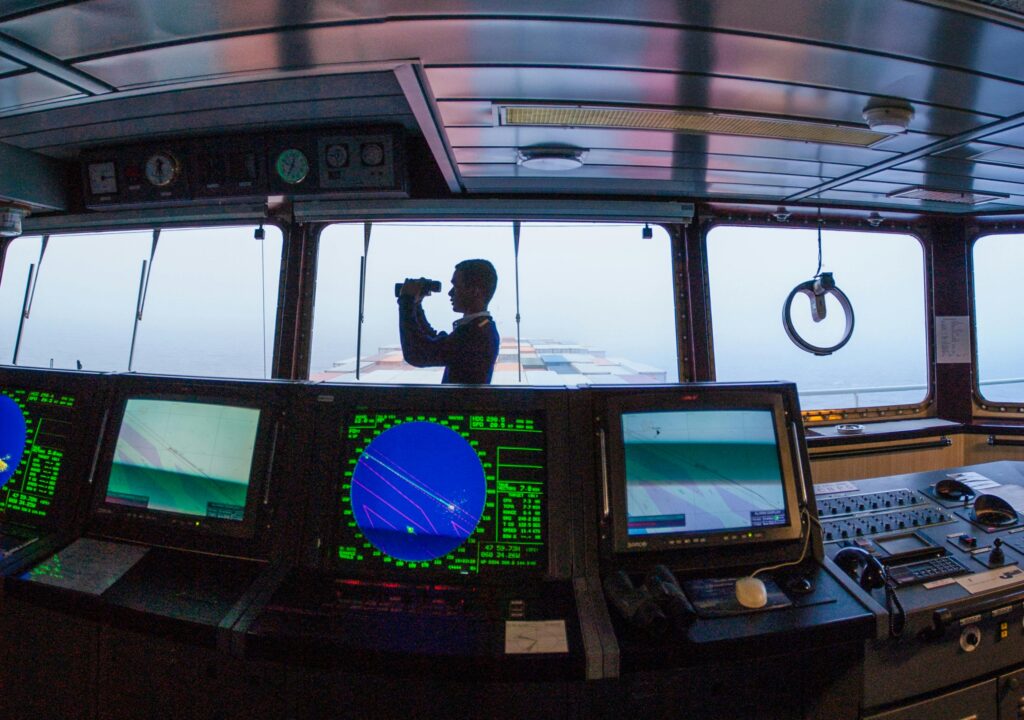
A ship never stops. At 3 a.m. in the middle of the Arabian Sea, someone is on the bridge looking out for traffic, and someone may be in the engine room checking pressures. The system that makes this possible is called watchkeeping, and the most common pattern on merchant ships is 4-on/8-off.
4-on/8-off watchkeeping means a seafarer stands watch for 4 hours, then is off watch for 8 hours, and repeats this twice in every 24 hours. Three officers share the day, so the ship is always manned.
In this guide you will learn the exact watch timings, which rank keeps which watch, how the engine room differs, what STCW and MLC rest-hour rules say, and what this routine really feels like for a cadet or a new officer.
Quick Answer
4-on/8-off is a three-watch system used on most ocean-going merchant ships. The day is divided into six 4-hour watches, and each watchkeeper stands two of them — for example 12:00–16:00 and 00:00–04:00. That is 8 hours of watch per day. Actual working hours are often longer because of day work, cargo operations and drills.
The Six Watches of the Day
Ships divide 24 hours into six watches of 4 hours each. Each officer “owns” two watches, 12 hours apart.
| Watch | Times (ship’s time) | Usually Kept By (Deck) |
|---|---|---|
| 12–4 | 00:00–04:00 & 12:00–16:00 | Second Officer |
| 4–8 | 04:00–08:00 & 16:00–20:00 | Chief Officer |
| 8–12 | 08:00–12:00 & 20:00–24:00 | Third Officer |

This allocation is a widely followed industry practice, not a legal rule. Company procedures, ship size and the Master’s standing orders decide the final arrangement.
Who Keeps Which Watch — and Why
The 4–8 Watch: Chief Officer
The Chief Officer usually takes the 4–8. The logic is practical: this watch covers dawn and dusk, the times of morning and evening twilight when star sights were traditionally taken for celestial navigation. It also leaves the Chief Officer’s daytime free (08:00–16:00) to run deck maintenance, cargo planning and safety work, which is a big part of the job.
The 8–12 Watch: Third Officer
The Third Officer, usually the most junior watchkeeping officer, takes the 8–12. During the morning part, the Master is normally awake and available on the bridge, which gives extra support to the least experienced officer. The night part ends at midnight, so the Third Officer gets a long, unbroken sleep afterwards.
The 12–4 Watch: Second Officer
The 12–4 is famously called the “graveyard watch” or “middle watch.” From midnight to 04:00, the body’s natural sleep drive is at its strongest, so staying alert is hardest. The Second Officer, usually the navigating officer, often takes it. The afternoon 12–4 gives them time around it to do passage planning and chart/ECDIS corrections.
Where Is the Captain?
On most ships with three watchkeeping officers, the Master does not keep a regular watch. Instead, the Master gives standing orders and night orders, and must be called by the OOW (Officer of the Watch) in situations such as heavy traffic, restricted visibility or any doubt. On smaller vessels with fewer officers, the Master may keep a watch.
Ratings on Watch
An AB (Able Seaman) or OS (Ordinary Seaman) is usually paired with each deck officer as a lookout and helmsman, especially at night. They follow the same 4-on/8-off pattern.
How the Engine Room Works
The engine room has two possible setups.
1. Manned engine room (watchkeeping) On ships without unmanned machinery space approval, engineers follow 4-on/8-off just like the deck. A common pattern is:
| Watch | Usually Kept By (Engine) |
|---|---|
| 4–8 | Second Engineer |
| 8–12 | Fourth Engineer (or Junior Engineer) |
| 12–4 | Third Engineer |
Each engineer is usually paired with an oiler/motorman. Again, this varies by company.
2. UMS (Unmanned Machinery Space) Many modern ships are approved for UMS operation. Engineers work day work (typically around 08:00–17:00), and at night the engine room is left unmanned with alarms connected to cabins and the bridge. One engineer is the duty engineer on a rotation and must respond to alarms. On a busy night, the duty engineer may be woken several times.
What the Rules Say: STCW and MLC Rest Hours
Watchkeeping is not just tradition — rest is regulated by international law.

STCW (Section A-VIII/1 — Fitness for Duty)
For watchkeepers and those with designated safety, security or pollution-prevention duties:
- Minimum 10 hours of rest in any 24-hour period
- Minimum 77 hours of rest in any 7-day period
- Rest may be split into no more than two periods, one of which must be at least 6 hours
- The gap between two rest periods must not exceed 14 hours
Flag states may allow limited exceptions (for example, weekly rest not below 70 hours), with conditions.
MLC 2006 (Standard A2.3)
The Maritime Labour Convention sets the limits either as:
- Maximum work: 14 hours in any 24 hours and 72 hours in any 7 days, or
- Minimum rest: 10 hours in any 24 hours and 77 hours in any 7 days
MLC also requires a posted table of shipboard working arrangements, and a record of each seafarer’s daily hours of rest or work, signed by the seafarer and the Master, with a copy given to the seafarer.
Emergencies
Both STCW and MLC allow the Master to suspend the schedule in an emergency — for the safety of the ship, people or cargo, or to help another ship in distress. Afterwards, seafarers who lost rest must be given compensatory rest.
India context: India is a party to STCW and has ratified MLC 2006. For Indian-flag ships, these standards are applied through Indian merchant shipping law and DG Shipping rules. On foreign-flag ships, the rules of the flag state apply. Readers should verify the latest official notification for specific national provisions.
Does 4-on/8-off Mean an 8-Hour Workday?
On paper, yes: two 4-hour watches = 8 hours. In practice, many watchkeepers work more.
Typical extra work includes:
- Day work: maintenance, paperwork, safety equipment checks
- Cargo operations in port
- Drills: fire, abandon ship, enclosed space, etc.
- Arrival/departure stations, mooring and unmooring
- Inspections and audits: vetting, PSC, internal audits
This is exactly why rest-hour rules exist — to put a legal ceiling on how much of the 16 “off” hours can be eaten up by work.
Example: A Third Officer’s Day at Sea
| Time | Activity |
|---|---|
| 00:00–07:15 | Sleep (rest) |
| 07:15–08:00 | Breakfast, prepare for watch |
| 08:00–12:00 | Bridge watch |
| 12:00–13:00 | Lunch, rest |
| 13:00–15:00 | Day work: life-saving appliance and fire equipment checks |
| 15:00–20:00 | Rest, exercise, dinner, personal time |
| 20:00–24:00 | Bridge watch |
Here the officer works 10 hours (8 watch + 2 day work) and rests 14 hours, with one long rest block of over 7 hours — comfortably within STCW/MLC limits. On a cargo day in port, the same officer could come much closer to the limit.
The Real Challenge: Fatigue and Sleep

4-on/8-off sounds generous, but it creates a split-sleep pattern. You rarely sleep 8 hours at once. The 12–4 watchkeeper, for example, might sleep 04:30–11:30 and nap in the evening.
Practical habits experienced seafarers use:
- Protect the main sleep block. Treat it as non-negotiable.
- Use blackout curtains and earplugs for daytime sleep.
- Limit caffeine in the last few hours before sleep.
- Report the 10/77 hours honestly in your rest-hour record. Falsified records hide fatigue and can fail inspections.
- Speak up if workload makes compliance impossible. Fatigue is a recognised factor in marine accidents.
4-on/8-off vs Other Watch Systems
| System | Pattern | Where It Is Used |
|---|---|---|
| 4-on/8-off | Three watches, 2 × 4 hrs per day | Most ocean-going ships with three OOWs |
| 6-on/6-off | Two watches, 2 × 6 hrs per day | Smaller ships, some coasters and offshore vessels with two OOWs |
| 12-on/12-off | One long shift each | Some offshore/port-based operations |
| Day work + UMS duty | Day hours + night alarm rotation | UMS engine rooms |
6-on/6-off gives 12 hours of rest in two 6-hour blocks, which meets the minimum on paper, but leaves almost no room for extra work. Many seafarers find it more tiring over a long contract.
Dog watches: Some navies and traditional ships split the 16:00–20:00 watch into two 2-hour “dog watches” so that the schedule rotates daily. This is uncommon on modern merchant ships.
Where Do Cadets Fit In?
Deck and engine cadets are trainees, not watchkeeping officers. Their routine depends on the company and training plan, but common patterns are:
- Day work with the bosun or engineers, plus
- Understudy watches with an officer (often the Chief Officer’s 4–8 or the Third Officer’s 8–12) to complete Training Record Book tasks.
Cadets have the same right to minimum rest hours. Under-18 seafarers have extra protections under MLC, including restrictions on night work.
Why this matters for your career: the watches you keep as a cadet build the sea time and competence you need for the Second Mate (FG) or MEO Class IV CoC examination. Take every watch seriously — it is your real training ground.
Key Takeaways
- 4-on/8-off = 4 hours on watch, 8 hours off, twice a day, shared by three officers.
- Deck: Chief Officer 4–8, Second Officer 12–4, Third Officer 8–12 (common practice, not law).
- Engine rooms may follow 4-on/8-off or UMS day work with duty rotation.
- STCW/MLC require at least 10 hours rest in 24 and 77 in 7 days, with strict rules on splitting rest.
- Real working hours are often more than 8, so honest rest-hour records matter.
Watch arrangements vary by company, vessel and flag. Readers should verify the latest official notification and their company’s procedures where applicable.
Conclusion
4-on/8-off is the heartbeat of life at sea. It keeps the ship safe around the clock and gives every watchkeeper a predictable rhythm. Learn the timings, understand the rest-hour rules, and build good sleep habits from your cadet days — you will be a safer, sharper officer for it.
13. FAQ Section
What does 4-on/8-off mean on a ship? It means a seafarer keeps watch for 4 hours and is off for 8 hours, twice in every 24 hours. Three people share the six daily watches.
Who keeps the 12–4 watch on a ship? On most merchant ships, the Second Officer keeps the 12–4 watch (00:00–04:00 and 12:00–16:00), though company practice can vary.
Why is the 12–4 called the graveyard watch? Because midnight to 04:00 is when the body most wants to sleep, making it the hardest time to stay alert.
Why does the Chief Officer keep the 4–8 watch? It covers dawn and dusk, traditionally used for star sights, and leaves the Chief Officer’s working day free to manage deck work and cargo.
Does the Captain keep a watch? On most ships with three watch officers, no. The Master supervises through standing orders and is called when needed. On small ships, the Master may keep a watch.
What are the minimum rest hours for seafarers under STCW? At least 10 hours of rest in any 24-hour period and 77 hours in any 7-day period. Rest can be split into no more than two periods, one at least 6 hours long.
What is the maximum working time under MLC 2006? No more than 14 hours in any 24 hours and 72 hours in any 7 days, if the flag state uses the hours-of-work method.
Do engineers follow 4-on/8-off? On manned engine rooms, yes. On UMS ships, engineers usually work day hours with a rotating duty engineer at night.
What is the difference between 4-on/8-off and 6-on/6-off? 4-on/8-off uses three watchkeepers and shorter watches. 6-on/6-off uses two watchkeepers with longer watches and less rest flexibility, mostly on smaller vessels.
Do deck cadets keep watch? Cadets usually do day work and understudy watches with an officer as part of their training. They are not in charge of a watch
4-on/8-off watchkeeping, watchkeeping on ships, ship watch schedule, STCW rest hours, MLC hours of work and rest, 12-4 watch, Officer of the Watch (OOW), 6-on/6-off watch system, UMS engine room, who keeps the 12 to 4 watch on a ship, why is the 12-4 watch called the graveyard watch, how many hours do seafarers work per day, minimum rest hours for seafarers STCW, 4 on 8 off vs 6 on 6 off, do deck cadets keep watch, watch timings for third officer, second officer and chief officer
Pingback: IMO Net-Zero Framework Explained: What MEPC 85 (Dec 2026) Could Decide for Shipping and Seafarers - Fleet Frontier