
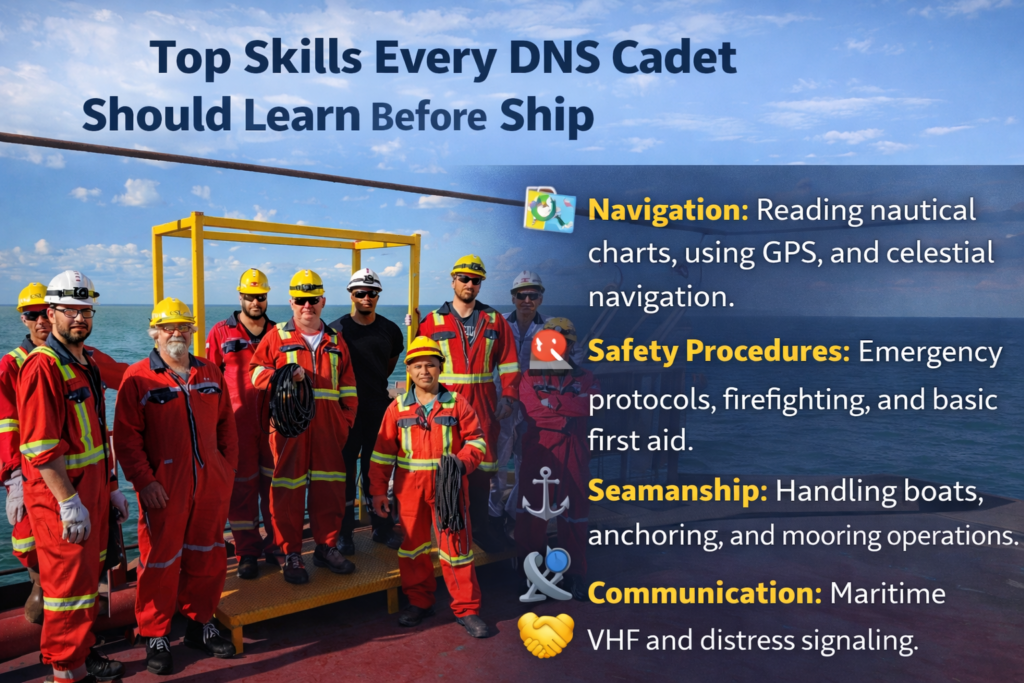
Top Skills Every DNS Cadet Should Learn Before Joining Ship
Essential Skills for Ship Cadets
Starting your life at sea is exciting, intimidating, and—let’s be honest—a little dramatic. One day you are a classroom cadet, the next you are standing on a moving steel city surrounded by water in every direction. The Diploma in Nautical Science (DNS) course prepares you academically, but life on board tests your real-world skills.
Shipping companies do not expect perfection from a fresher. They expect preparedness. Cadets who arrive with the right skills adapt faster, earn trust quickly, and avoid rookie mistakes that can cost time, reputation, or safety.
This article breaks down the top skills every DNS cadet should learn before joining ship, explained in a practical, honest, and no-nonsense way—backed by real maritime practices, not internet myths.
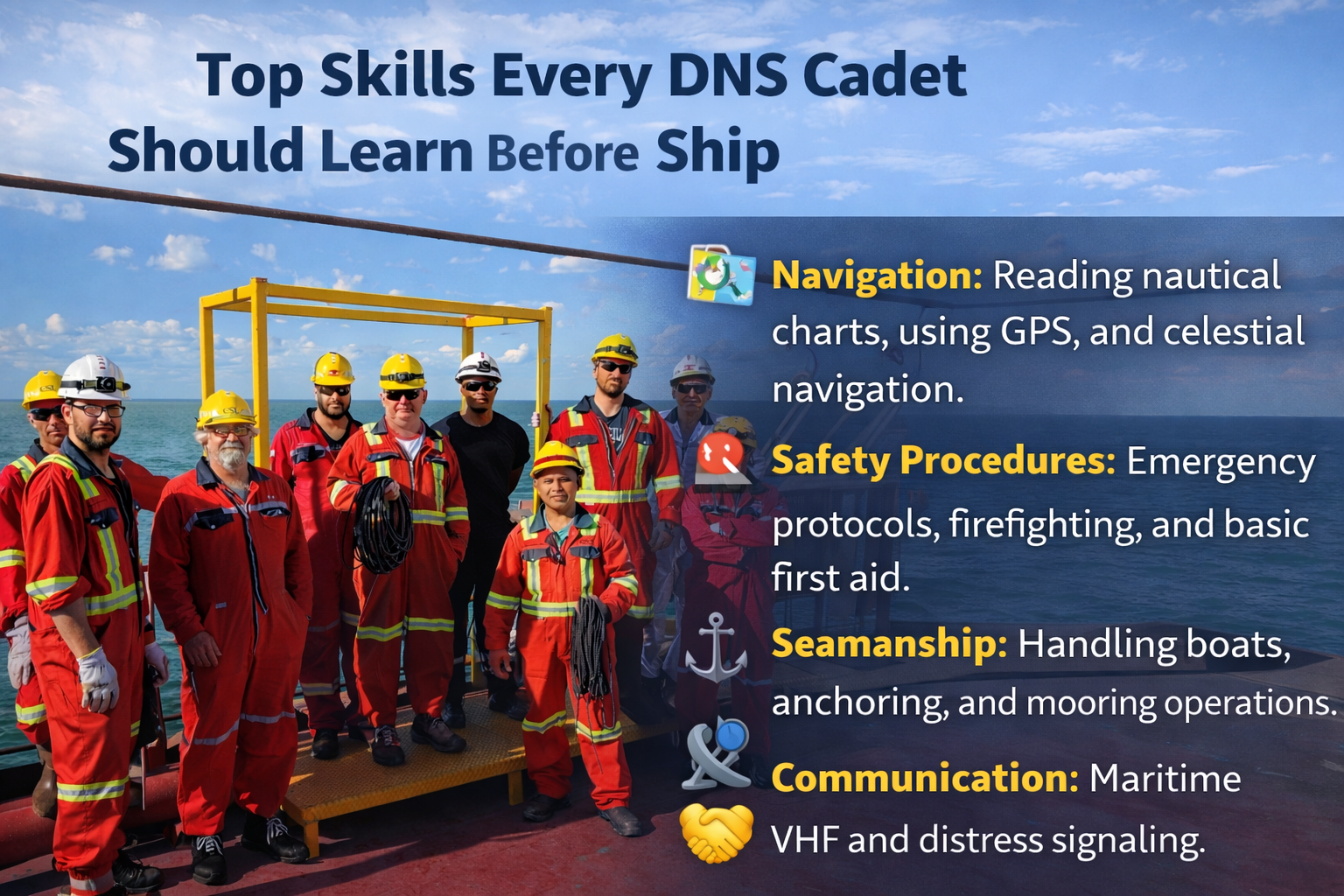
Why Skills Matter More Than Marks at Sea
At sea, nobody asks your percentage. They ask:
- Can you read this chart?
- Can you react during an emergency?
- Can you work with others at 3 a.m. in rough weather?
Ships operate on competence, discipline, and teamwork. A cadet with strong basics becomes useful. A cadet without them becomes a liability. That is maritime reality—no filters, no emojis.
Essential Skills Overview (Quick Table)
| Skill Area | Why It Matters Onboard | When You Use It |
| Navigation | Safe passage & watchkeeping | Bridge watches |
| Safety Procedures | Life-saving readiness | Emergencies |
| Seamanship | Ship handling & deck work | Daily operations |
| Communication | Avoid accidents & confusion | Bridge & deck |
| Teamwork | Smooth ship operations | Every single day |
| Situational Awareness | Prevent incidents | All watches |
| Discipline & Time Management | Ship efficiency | Routine duties |
| Physical & Mental Fitness | Long contracts & stress | Entire voyage |
Now let’s break each one down properly.
1. Navigation: The Brain of a Ship
Navigation is not just about “finding directions.” It is about keeping the ship safe, legal, and efficient.
What a DNS Cadet Should Know
- Reading nautical charts (paper and ECDIS basics)
- Understanding latitude, longitude, and bearings
- Basic GPS and radar awareness
- Introduction to celestial navigation (yes, stars still matter)
You won’t plan voyages as a cadet, but officers will expect you to understand what is happening on the bridge.
Why It Matters
Poor navigation awareness causes collisions, groundings, and near misses. A cadet who understands navigation earns bridge time. A cadet who doesn’t gets sent back to deck work—permanently.
2. Safety Procedures: Non-Negotiable Skill
Safety is not a chapter in a book. It is a way of life onboard.
Core Safety Skills
- Firefighting basics (classes of fire, extinguishers)
- Emergency alarms and muster stations
- Basic first aid and CPR awareness
- Use of PPE (personal protective equipment)
Real Talk
In an emergency, nobody cares if you panic politely. They care if you act correctly. Ships drill safety repeatedly because muscle memory saves lives.
If you remember only one thing: Safety mistakes are never forgiven at sea.
3. Seamanship: The Soul of a Deck Officer
Seamanship is where theory meets saltwater.
Skills Every Cadet Must Practice
- Knot tying and rope handling
- Mooring and unmooring operations
- Anchoring procedures
- Basic boat handling knowledge
Why Seamanship Separates Cadets
Anyone can memorize COLREGs. Seamanship shows hands-on intelligence. Officers notice cadets who understand ropes, tension, and ship movement instinctively.
And yes—wrong rope handling hurts. A lot.
4. Communication: Clear Words Save Ships
Ships are noisy, multicultural, and stressful environments. Clear communication prevents accidents.
What to Learn
- Standard marine vocabulary
- VHF radio basics
- Distress and urgency signals
- Listening skills (underrated but critical)
Common Cadet Mistake
Talking too much or too little. The goal is clear, short, and accurate communication. Not a speech. Not silence.
5. Teamwork: No One Sails Alone
A ship is a floating workplace where cooperation is survival.
Teamwork Skills to Develop
- Respect for hierarchy
- Cultural awareness
- Calm behavior under pressure
- Willingness to help without ego
Reality Check
You may work with 15 nationalities on one ship. Attitude matters more than accent. Good teamwork makes contracts easier. Bad attitude makes them longer.
6. Situational Awareness: Think Before You Move
Situational awareness means understanding:
- Where you are
- What is happening
- What could go wrong next
Why It’s Critical
Most accidents happen due to assumptions, not ignorance. A cadet who observes quietly often prevents mistakes without saying a word.
7. Discipline and Time Management
Ships run on schedules tighter than airport runways.
Learn to:
- Report on time
- Maintain routines
- Follow instructions accurately
- Keep your cabin and gear organized
Officers trust disciplined cadets. Undisciplined ones get watched—and not in a good way.
8. Physical Fitness: Ships Are Not Gyms
Life onboard is physically demanding.
Why Fitness Matters
- Long hours on deck
- Weather exposure
- Emergency response readiness
You don’t need six-pack abs. You need stamina, balance, and strength.
9. Mental Strength: The Silent Skill
Sea life tests patience more than muscles.
Challenges Cadets Face
- Homesickness
- Long contracts
- Limited privacy
- Cultural adjustments
Mental resilience keeps you focused and professional even on bad days. Ships remember calm cadets.
10. Learning Attitude: The Ultimate Skill
The best cadets are not the smartest. They are the most curious.
What Officers Appreciate
- Asking relevant questions
- Taking notes
- Accepting corrections without ego
Ships train future officers, not know-it-alls.
Skill-to-Ship Reality Table
| Skill | Shipboard Impact |
| Navigation | Safe watchkeeping |
| Safety | Emergency readiness |
| Seamanship | Efficient deck operations |
| Communication | Accident prevention |
| Teamwork | Smooth daily work |
| Awareness | Risk reduction |
| Discipline | Officer trust |
| Fitness | Endurance |
| Mental Strength | Long-term success |
Pro Tip for DNS Cadets
The sea does not demand perfection.
It demands skill, discipline, and heart.
If you prepare before joining ship, your first contract becomes a learning adventure—not a survival test.

Trusted Sources for Further Learning
To ensure accuracy and credibility, this article aligns with guidance from:
- International maritime training standards (STCW framework)
- Maritime safety manuals used by shipping companies
- Nautical science training curricula followed by approved institutes
These standards form the backbone of professional seafaring worldwide.
Final Thoughts
Joining a ship as a DNS cadet is the beginning of a serious profession. Skills learned early shape your entire maritime career. Focus on fundamentals, stay humble, and keep improving.
The ocean rewards preparation.
The unprepared… it teaches harsh lessons.
Keep learning. Keep growing. Your journey at sea starts now.