Fleet Frontier

MARINE ENGINEERING

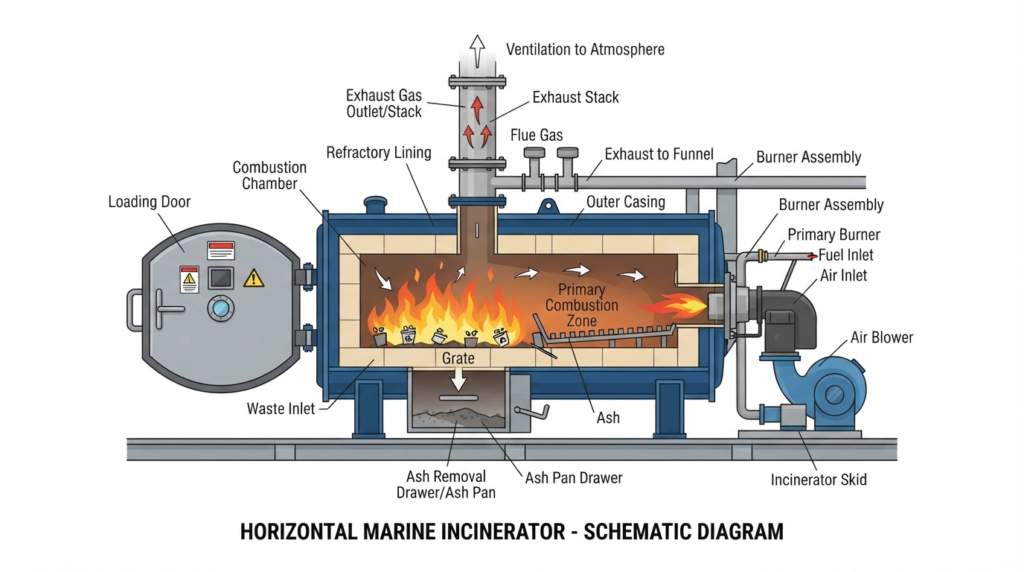
Cutaway diagram of a horizontal marine incinerator with charging door, auxiliary burner, refractory lining and flue gas duct

Ship Incinerator: How Ships Burn Sludge Oil & Garbage

Where Does a Ship’s Waste Go? Inside the Marine Incinerator A cargo ship hundreds of miles from land still produces waste every day: purifier sludge, used lubricating oil and oily residues from the engine room, plus food waste, paper and packaging from the galley and accommodation. It cannot dump most of it overboard. A ship

Ship Incinerator: How Ships Burn Sludge Oil & Garbage Read More »

Chief Engineer standing beside marine diesel engine in a merchant ship engine room

Chief Engineer Salary in Merchant Navy 2026: Monthly Pay

Chief Engineer Salary in Merchant Navy 2026: Monthly Pay Updated: October 2026 The Chief Engineer is the highest-ranking engineering officer on a merchant ship and is responsible for the safe and efficient operation of its machinery and engine department. Because this position requires extensive sea experience, professional certification and strong technical leadership, it is one

Chief Engineer Salary in Merchant Navy 2026: Monthly Pay Read More »

Marine engineers monitoring bunker hose and manifold during ship bunkering from a bunker barge

Ship Bunkering: Procedure, Safety, Types & Rules (2026 Guide)

Ship Bunkering Explained: Procedure, Safety Checks, Types and Regulations (2026 Guide) By V.K. Singh · Fleet Frontier · Last Updated: October 2026 Ship bunkering is the process of supplying fuel to a ship for its own use — for main engines, generators and boilers. If you are a marine engineering student, an engine cadet or

Ship Bunkering: Procedure, Safety, Types & Rules (2026 Guide) Read More »