
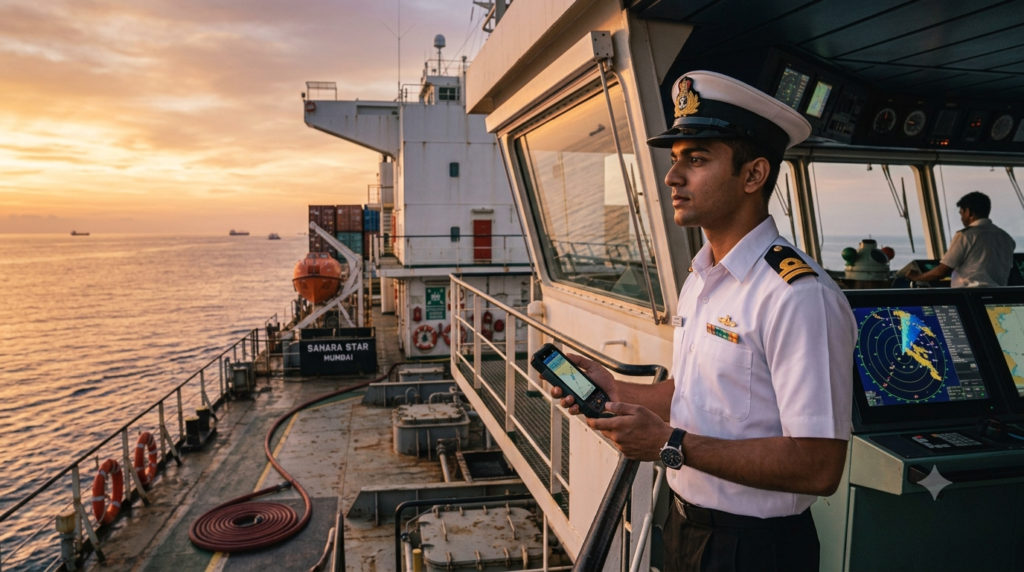
Life on a Merchant Ship in 2026: Daily Routine, Pay and Life at Sea
Executive Summary: Life on a merchant ship is highly structured and demanding. Seafarers work in shifts (watches) and follow a routine of navigation duties, maintenance tasks and safety drills. They spend months away from home with limited communication, living in tight quarters. This article covers daily routines, watch schedules, food, accommodation, hierarchy, contracts, pay, health care, safety drills, mental health and more – giving a comprehensive picture of modern Merchant Navy life from an Indian perspective.
Quick Answer: Seafarer life is routine yet challenging. Work and rest follow strict watch schedules – often 4-hour watches with mandated rest periods. Meals are at set times, duties rotate between navigation, maintenance or firefighting, and rigorous safety drills occur weekly. Crew spend long voyages away from family (often 6–9 months) with only each other for company. Despite confinement and hard work, many find strong camaraderie and a sense of adventure.
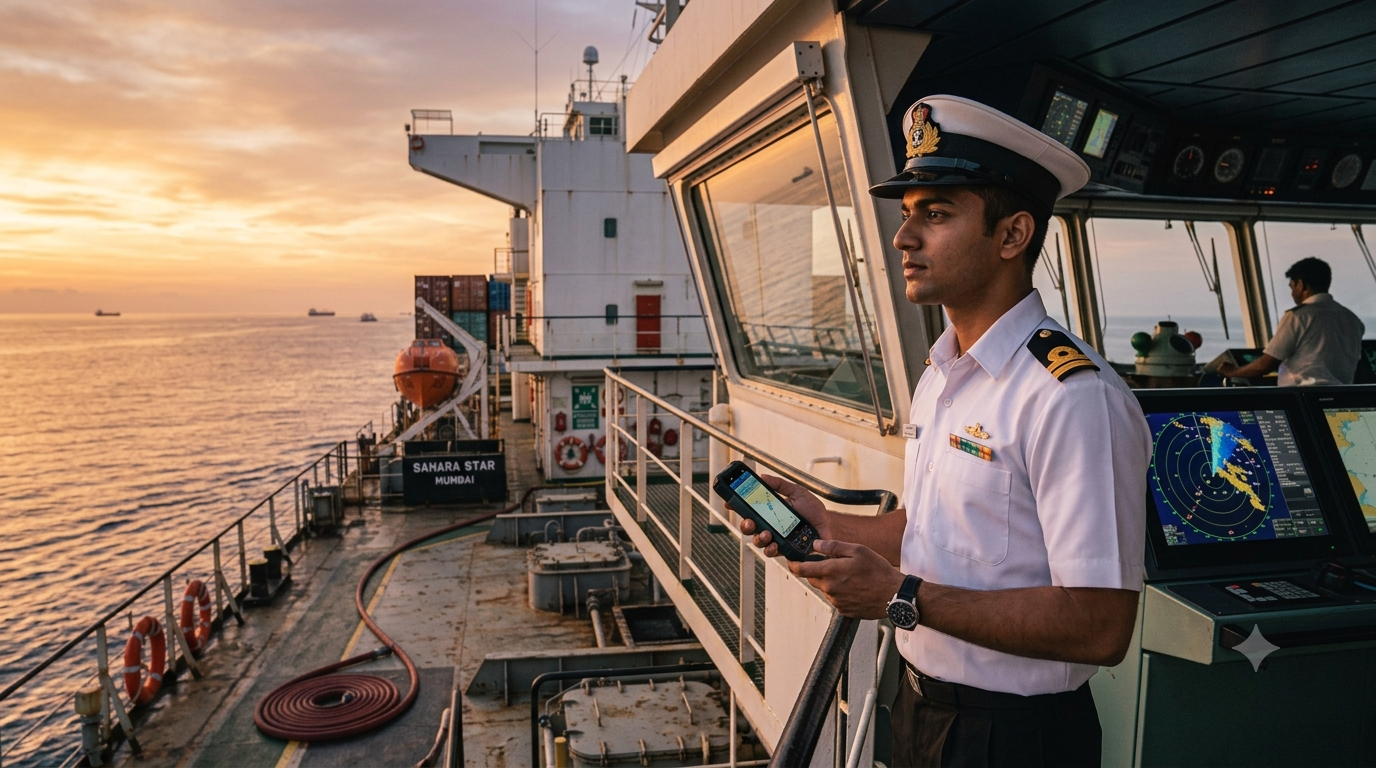
Daily Routine and Watchkeeping
Life aboard a merchant vessel revolves around the watch system. The ship is always manned, usually on a 24-hour rotational schedule. For example, on a typical container or cargo ship the bridge team often keeps 4-hour watches – e.g. 0000–0400, 0400–0800, etc. (known as 4 to 8 watch, 8 to 12 watch, etc.) Deck officers and lookouts share these watches, while the engine room may run on 6-on/6-off watches or similar shifts. The remaining time between watches is for meals, rest, chores and training. Importantly, maritime regulations require at least 10 hours’ rest within any 24-hour period and 77 hours in any 7-day period. This “10/77 rule” is mandated by MLC 2006 and STCW (Manila Amendments) and enforced by DG Shipping (DGS) audits. As a result, while seafarers often work 8–12+ hour days, the schedule must be arranged so crew still get adequate sleep.
A typical daily schedule might look like:
| Time (hrs) | Example – Deck Officer (3/O) | Example – Rating (AB) |
|---|---|---|
| 0000–0400 | 2nd Watch (monitor navigation instruments, standby) | Off-duty (sleep/rest) |
| 0400–0600 | Off-duty (morning meal & rest) | Exercise/gym/maintenance |
| 0600–0800 | Breakfast, safety checks | Breakfast, cleaning deck |
| 0800–1200 | 1st Watch (bridge duties) | 4th Engineer duty (engine room) or chores |
| 1200–1300 | Lunch | Lunch |
| 1300–1700 | Maintenance/training | Workshops or leisure |
| 1700–1800 | Dinner | Dinner |
| 1800–2000 | 3rd Watch (bridge) | 3rd Engineer duty / repair work |
| 2000–2200 | Off-duty (sleep/prep) | Off-duty (sleep/prep) |
| 2200–0000 | 4th Watch (bridge) | Off-duty (sleep/prep) |

The exact routine depends on rank and ship type. Ratings (crew) often have longer stretches of continuous work (such as 9–10 months contracts) and work intense shifts; Officers may have shorter contracts (4–6 months) and often more structured rest planning. Deck and engineering watches are staggered so one department isn’t always busy while the other sleeps. Modern companies use logbooks and electronic tracking to ensure compliance – falsifying logs can be considered a serious offense.
Pro tip: Carry a small watch or alarm clock; routines can shift with port calls and drills, and it’s easy to lose track of time onboard. Some ships have quiet hours (“heave to”) around midday.
A seafarer from a sailing ship captures the feeling well: “Daily life on board is very structured. Clear routines: mealtimes, your watches… safety rules that must be followed. This gives the day a framework and has a very calming effect”. Indeed, life at sea is governed by repetition and discipline. When unexpected events occur – heavy weather, equipment problems or high-traffic passages – flexibility and teamwork are crucial.
Food & Mess
Meals on board are provided in a mess hall or dining saloon. Officers often dine separately from ratings (with more privacy); crew in general messes. The Catering Department (headed by a Chief Cook) prepares 3 fixed meals a day plus tea/snacks. Food varies by ship and nationality of cook, but generally includes staples like rice, bread, pulses, vegetables, meat or fish, curry, soup, etc. Indian ships often serve Indian-style food, and fresh fruits/veg are loaded at major ports to supplement. Special meals are arranged during festivals or birthdays.
Food quality can range from “excellent home-cooked” on top-tier companies to “basic but edible” on budget ships. Mess decks are a social hub at meal times. Cadets and junior ratings help serve food or clean up, as part of learning duties. Excessive sugar or caffeine may be limited for safety (to avoid hyperactivity on watch).
Crew Perk: Many employers provide free unlimited water, tea/coffee and sometimes fresh milk. Seafarers frequently praise unlimited chai (tea) and coffee rounds!

Accommodation
Living quarters on ships are compact. Officers’ cabins are usually two-berth (shared) or single cabins, with a small desk, wardrobe and en-suite bathroom on larger ships. Ratings’ dorms may have 4–6 bunks per cabin (with common heads/showers). Air conditioning, heating and personal reading lights are standard. Most vessels now have televisions in common lounges and sometimes in cabins.
Despite limited space, efforts are made to provide “home-like” comfort: lockers for personal items, shared Wi-Fi, and recreational areas. For example, MLC 2006 requires “reasonable privacy” and “sufficient recreational facilities”. Many ships have gym equipment, satellite TV, a small library or game consoles for downtime.
“Being on board a ship can involve prolonged exposure to poor physical conditions,” notes one study – yet companies try to offset this with well-maintained facilities and climate control. Cabins sway and noise from engines are daily realities; seasickness remedies are provided as needed. Overall, modern ships meet international comfort standards, though space and personal time are still much less than ashore.

Hierarchy & Ranks
Every merchant ship has a clear command structure:
- Captain (Master): Overall in charge. Responsible for ship, crew and cargo.
- Chief Officer (2nd): Executive officer, oversees deck operations, cargo and safety.
- 2nd Officer: Navigation Officer, handles charts, voyage planning.
- 3rd Officer: Often Safety Officer, assists with navigation watches.
- Engine Officers: (Chief Engineer, 2nd, 3rd, 4th Engineers) responsible for engine room.
- Electro-Technical Officer (ETO): Manages electrical, electronic and automation systems.
- Catering Officers: (Chief Cook and stewards) manage food services and housekeeping.
- Ratings: (Bosun/Lead Hands, Able Seaman, Ordinary Seamen, Motorman, Oiler, Wiper, etc.) perform manual tasks, maintenance, watch support and cook/clean under catering dept.
Shipboard culture is formal yet close-knit. Lower-ranking crew address senior officers with “Sir/Madam” and responsibilities strictly follow rank. However, teamwork is essential. Junior officers and cadets often learn through apprenticeships under senior colleagues, taking on more duties as they gain experience.
Duties by Department
- Deck Department: Officers and seamen ensure safe navigation and operations. Duties include steering, lookout, bridge watch, cargo work (loading/unloading supervision), maintaining deck gear (winches, anchors), mooring, and safety drills.
- Engine Department: Engineers and ratings (oilers, greasers) run and maintain engines, generators, pumps, boilers and piping. They perform routine engine-room watches, machinery repairs, fuel and oil management, and respond to any technical issues 24/7.
- Electro-Technical (ETO): ETOs handle generators, electric propulsion (if any), navigation electronics, automation controls, radar, radio communication, and ship’s IT systems. They repair wiring, lights and ensure all electronic equipment runs smoothly.
- Catering Department: Cooks and stewards manage the galley, food stores, meal prep, dishwashing and cabin housekeeping. They ensure hygiene standards and often adjust menus based on crew feedback or cultural preferences.
Each department has its own work rhythm. For example, deck officers may go on “deck maintenance” in port, while engineers work through the night engine watch. Catering staff typically work late mornings and early evenings (around meal prep times) and rest early or late.
Contracts, Rotations & Leave
Seafarers sign sea-service contracts specifying voyage duration and leave. Contract lengths vary by rank and company:
- Officers (deck/engine/ETO): Typically 4–6 months on, then a few months off. Some lines (especially in oil/LNG shipping) operate 4-month rotations as a norm for senior officers. Other companies use 6-month contracts.
- Ratings/Crew: Often 8–10 months on, followed by 1–2 months leave. Historically, 9-month contracts with 3 months leave were common.
- Under the MLC 2006 standard, continuous service should be “less than 12 months” before repatriation. Thus in practice contracts usually do not exceed 11 months.
| Rotation Example | Onboard Period | Leave Period |
|---|---|---|
| Short (Fast-Track) | 4 months | 2–3 months |
| Standard (Many Tankers) | 6 months | 2–3 months |
| Long (General Cargo/Ratings) | 9 months | 2–3 months |
After each contract, crew are flown home and given paid shore leave. Repatriation is guaranteed by law: if contract ends or any serious issue arises, the company must return the seafarer home at no cost. During global crises (e.g. pandemics), seafarers’ leave may be extended or delayed, but usually companies arrange rotations to avoid leaving anyone aboard beyond allowed time.
Leave and Repatriation
Indian law (Merchant Shipping Act) and MLC rules ensure seafarers receive their agreed leave and are repatriated upon contract completion. For example, Indian seafarers who spend “more than 182 days outside India” in a financial year may enjoy certain tax benefits, reflecting the extended offshore leave patterns.
Shore leave at ports can be limited by visa rules and work demands; often crew get only 1–2 hours in port for short stays, but have longer holidays between contracts. Companies encourage applying for shore passes when safe, as personal time helps morale.
Pay and Allowances
Salary varies widely by rank, ship type and experience. Captains and Chief Engineers on large ships can earn the highest (often several lakhs INR per month after deductions), while junior ratings start much lower. Officers typically receive a consolidated wage plus allowances. The ITF/ILO sets minimum wage guidelines (e.g. US$690/month for an Able Seafarer as of 2026), but actual pay is often higher.
In India, a recent DGMA guideline suggests (indicatively) Deck Cadets ₹25–60K, 3rd Officers ₹1.2–2.5L, Chief Officers ₹3.5–5L, Captains ₹5–8L+, and similar for Engineers. Senior officers on specialized vessels (LNG/LPG tankers, offshore) can earn more.
Beyond salary, seafarers receive allowances:
- Leave Travel Allowance (LTA): to cover flight home after contract.
- Wages & Travel (W/T): a fixed sum for joining/leaving.
- Risk or Service Allowances: e.g. for longer contracts.
- Hazard Pay: for ships in dangerous waters.
- Overtime/Bonus: depend on company policies.
- Provident Fund, Insurance, etc. are also part of the package.
Seafarer pay is usually tax-exempt if criteria met (e.g. spending >182 days at sea). Wages must be paid on time (usually monthly) by law; failure to pay or excessive deductions can lead to legal action.
Health and Medical Care
Onboard medical care is basic but regulated. Every ship must carry a medical chest and supplies and have a qualified “Designated Medical Officer” (often a senior officer) responsible for first aid. For serious illness or injury, the ship must arrange a medical evacuation to shore, covered by the employer. Many companies subscribe to emergency telemedicine (24/7 doctor-on-call) for diagnosis and prescription.
Sea staff undergo mandatory medical examinations (eyesight, hearing, fitness) before joining. The MLC 2006 mandates ships provide adequate medical facilities and ensure quick access to local hospitals when needed. Onboard, if a crew member falls sick, they are treated in the ship’s infirmary (often a small sick bay) and given rest or medication.
Routine health issues (cold, minor injuries) are handled by shipmates. Chronic conditions (diabetes, asthma) must be declared before joining, and doctors assess fitness. Vaccinations are updated as required (yellow fever, etc.) at port calls if needed.
Safety Drills and Emergency Procedures
Safety is a constant priority. All crew must participate in regular drills and training:
- Fire Drills: At least one monthly muster and fire drill (per SOLAS/ISM Code). Crew put on gear, go to muster stations, and practice fire-fighting or abandon protocols.
- Abandon-Ship Drills: Practiced quarterly, covering lifeboat boarding and lifejacket use.
- Muster Roster: Every person has a designated station in emergencies.
- Continuous Watch: Even during non-watch periods, one officer stands emergency duty in the radio room or as “Officer of the Watch” responsible for alarms.
Drills keep everyone prepared. As one officer’s logbook warns, logs must match reality – “Always ensure that the times recorded for drills, moorings, and watches match across all official documents”. Life rings, fire axes, breathing apparatus and lifejackets are checked regularly.

Mental Health and Isolation
Seafaring is rewarding but psychologically challenging. Studies show seafarers face “social isolation” with only shipmates for company, long separations from family, and confined living conditions. Factors like irregular sleep, noise, vibration and monotony can contribute to stress and fatigue. Multi-cultural crews may also experience language barriers or conflicts.
On the positive side, many crews form tight-knit bonds; colleagues become a “work-family”. Shipping companies and India’s DGS increasingly emphasize mental health – offering counseling services, confidential helplines and encouraging open communication of issues.
To cope, seafarers keep in touch via satellite phone, email or sometimes Wi-Fi (if available) to connect with loved ones. Recreational activities (gym, movies, reading, sports) are provided. Indian seamen often meet through phone/video calls, social media and port visits to alleviate homesickness. Nevertheless, long voyages demand resilience.
“Seafarers are typically isolated in a physical environment not optimal for mental health… long periods away from home and families… can lead to loneliness and homesickness”. The best defense is maintaining routines, staying active with hobbies, and supporting shipmates who may feel anxious or depressed.
Internet and Communication
Connectivity at sea is improving but still limited. Many vessels have VSAT (satellite internet) enabling email and messaging, but bandwidth is low and usage costly. Crew may get a fixed data allowance (e.g. 1–5 GB/month) often managed by the company. On newer ships, Wi-Fi hotspots allow chatting apps (WhatsApp, Skype) after work hours.
Some ports have free Wi-Fi, and ashore time is used to stock up on communications. Otherwise, voice calls are made via satellite phones or Thuraya phones – expensive but lifelines to family. Printed newspapers and radio are also common.
Tip: Save daily news websites offline when in port, then read during the voyage. Social apps on low data mode help stay connected without huge bills.

Shore Leave and Port Visits
Whenever a ship docks, crew are entitled to go ashore once immigration and local laws allow. Shore leave can range from a couple of hours to a day, depending on port scheduling and security. Officers sometimes stay on deck or bridge if the ship is being worked at, limiting leave opportunities.
Crew use shore leave to phone home via local SIMs or internet cafes, shop for essentials or simply relax. Safety rules apply: musters and checks continue in port, so seafarers carry their ID (CDC – Continuous Discharge Certificate) and often must return well before departure time. If a crew is delayed on board due to work, compensatory leave (or extra rest) is usually arranged later.
Career Progression
A Merchant Navy career is structured. Deck and Engine cadets start as trainees and gain sea-time towards a Certificate of Competency (CoC) through exams (IMU, MMD). A Deck Cadet (or GP Rating) after required sea-training and exams becomes Third Officer, then after years and exams advances to Second Officer, Chief Officer, and finally Master/Captain. Similarly, Engine Officers progress from 4th, 3rd, 2nd Engineers to Chief Engineer.
Electro-Technical Officers (ETOs) and Catering staff also have their own training and certification path (e.g., ETO certification or Ship’s Cook certificate).
Promotion often requires sailing on larger ships or tankers, attending specialized courses (e.g. radar, GMDSS, advanced firefighting), and passing competency exams. Performance, sea-time and continued training are key. A cadet should plan each rank’s requirements early.
Training, Exams and Certifications
Before joining, basic STCW safety courses are mandatory (Basic Safety, Firefighting, first aid, Personal Survival, etc.). Throughout their career, seafarers must regularly upgrade skills:
- GMDSS for radio officers.
- Radar/ARPA and Bridge Resource Management for deck officers.
- Marine Engineering Thermodynamics, Pumps, I.C. engines for engineers.
- Electro-Technical Courses for ETOs.
- Refreshers (every 5 years) on safety/medical/PSCRB (Personal Safety and Social Responsibilities) and advanced firefighting.
In India, the Indian Maritime University (IMU) and DG Shipping conduct exams (MMD) for CoCs. Preparation includes on-board training and approved institute courses. Top-tier companies often sponsor cadets through courses and international certificates.
Common Challenges
- Fatigue: Long watches, irregular sleep and short port turnarounds lead to tiredness. Strict logging helps, but still a real risk.
- Isolation: Months from family, confined quarters, cultural/language differences with crew can be stressful.
- Monotony: Calm sea days or repetitive tasks can feel boring, so seafarers need hobbies or studies to stay engaged.
- Seasickness: The first few days or rough weather can upset new entrants; anti-motion pills and rest help.
- Piracy/Terrorism: In some regions (e.g. Gulf of Guinea), security is an issue – armed guards and evasive maneuvers may be used.
- Weather Extremes: Storms or hot climates demand vigilance and physical endurance.
- Delays: Visa/immigration or port strikes can unexpectedly extend contracts.
Despite these, many seafarers say the positive (travel, good pay, adventure, camaraderie) outweighs the negatives.
Tips for Cadets
- Be Punctual and Disciplined: Always arrive on time for watches and jobs. Good habits build trust.
- Learn On-the-Job: Every task (even cleaning decks) has a lesson. Ask questions respectfully.
- Stay Fit: Exercise and eat well to handle long watches and heavy physical work.
- Be Culturally Aware: Ships have multinational crews. Respect differences and be patient.
- Manage Rest: Take rest seriously. Use off-watch time to sleep or relax. Fatigue can be dangerous.
- Keep Records: Logbooks, sea service books and training records must be accurate. DGS audits these closely.
- Safety First: Never skip drills or safety gear. Shipboard injuries can be severe.
FAQ
What is life like on a merchant ship?
Seafarers live by strict routines: shifts (watches) at sea, set mealtimes, and frequent safety drills. They spend months away from home, share cramped cabins with shipmates, and handle navigation or engineering duties in rotation.How long are contracts and leave for seafarers?
Contracts vary: many officers do 4–6 months aboard with ~2 months leave; ratings often do 8–10 months aboard with ~2–3 months leave. MLC rules require repatriation before 12 months of continuous service.What are the working hours onboard?
Ships use watchkeeping schedules. Typically an officer does a 4-hour on/8-hour off rotation. By law, each seafarer must have at least 10 hours’ rest per 24 hours and 77 hours per week.What kind of food do crew eat on board?
Cooks prepare 3 meals a day plus snacks. Menus often include rice, vegetables, meat or fish, curries, soups, and desserts, reflecting the crew’s cultures (e.g. Indian menus on Indian ships). Fresh produce is reloaded at ports.How are living conditions and accommodation?
Accommodations are basic but functional: officers get 1–2 person cabins (often with private bathrooms), while ratings share dorm-style rooms with bunks. Ships have common areas, exercise gear and usually good ventilation.How much do seafarers earn and what are allowances?
Pay depends on rank and vessel. Junior crew (ratings/cadets) earn modest wages, while senior officers earn much higher (often lakhs INR per month). In addition to salary, seafarers get allowances (travel, bonus) and benefits under the MLC (medical cover, repatriation, etc.).What medical facilities are available on ships?
Every ship carries a well-stocked medical chest and has a designated medical officer for first aid. Telemedicine services connect crew to doctors ashore. Employers cover all costs for serious medical treatment or evacuation.How do seafarers handle mental health and isolation?
Long voyages can be lonely. Crew stay connected via limited internet, calls, and in-person camaraderie. Many companies provide helplines and recreational facilities. Senior officers are expected to watch for signs of stress among crew.Can family visit or communicate often?
Direct family visits are rare due to visa and ship schedules. Communication is via phone/internet when in range (often by satellite). Some companies allot SIM data or Wi-Fi time. Crew save up calls and emails for port stops.Is it hard to get used to the ship routine?
Initially yes – the watch schedule and motion of sea can be tough. However, new seafarers usually acclimatize within 1–2 weeks. Senior crew mentor them. Those who adapt appreciate the structure and adventure of ship life.

Embrace evolution by nurturing a developing mindset, growing continuously, and adjusting to new obstacles.
studionagy.hu
Pingback: Is Merchant Navy a Government Job? Facts vs Govt Jobs (2026) - Fleet Frontier
Pingback: What Does a 4th Engineer Do on a Ship? Duties Explained - Fleet Frontier