
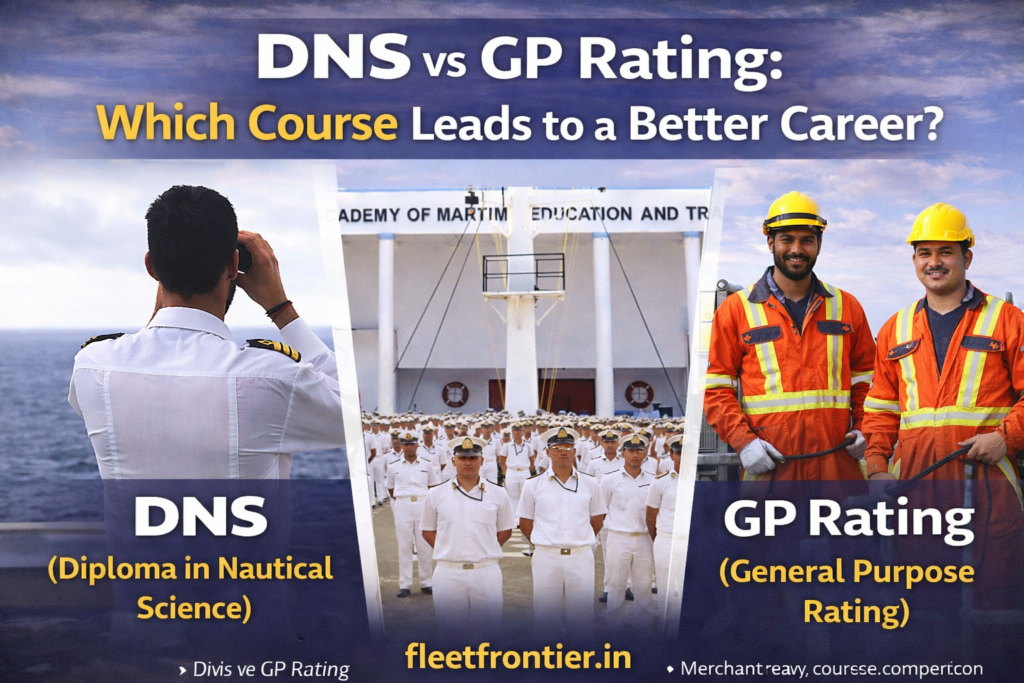
DNS vs GP Rating: Which Course Is Better for You?
DNS vs GP Rating: Which Course Is Better for You. Choosing a career in the Merchant Navy feels exciting, right? Big ships, global travel, and a salary that makes your relatives suddenly very interested in your life. But before you imagine yourself on the bridge of a massive container ship, there’s a crucial decision to make.
DNS or GP Rating?
This single choice can shape your entire maritime career. Pick wisely, and you’ll sail smoothly. Pick blindly, and you may feel stuck mid-ocean career-wise, of course.
Let’s break this down logically, honestly, and with zero fake hype.
Understanding Careers in the Merchant Navy
The Merchant Navy doesn’t work like a normal 9–5 office job. Ships need leaders and support professionals. That’s where officers and ratings come in.
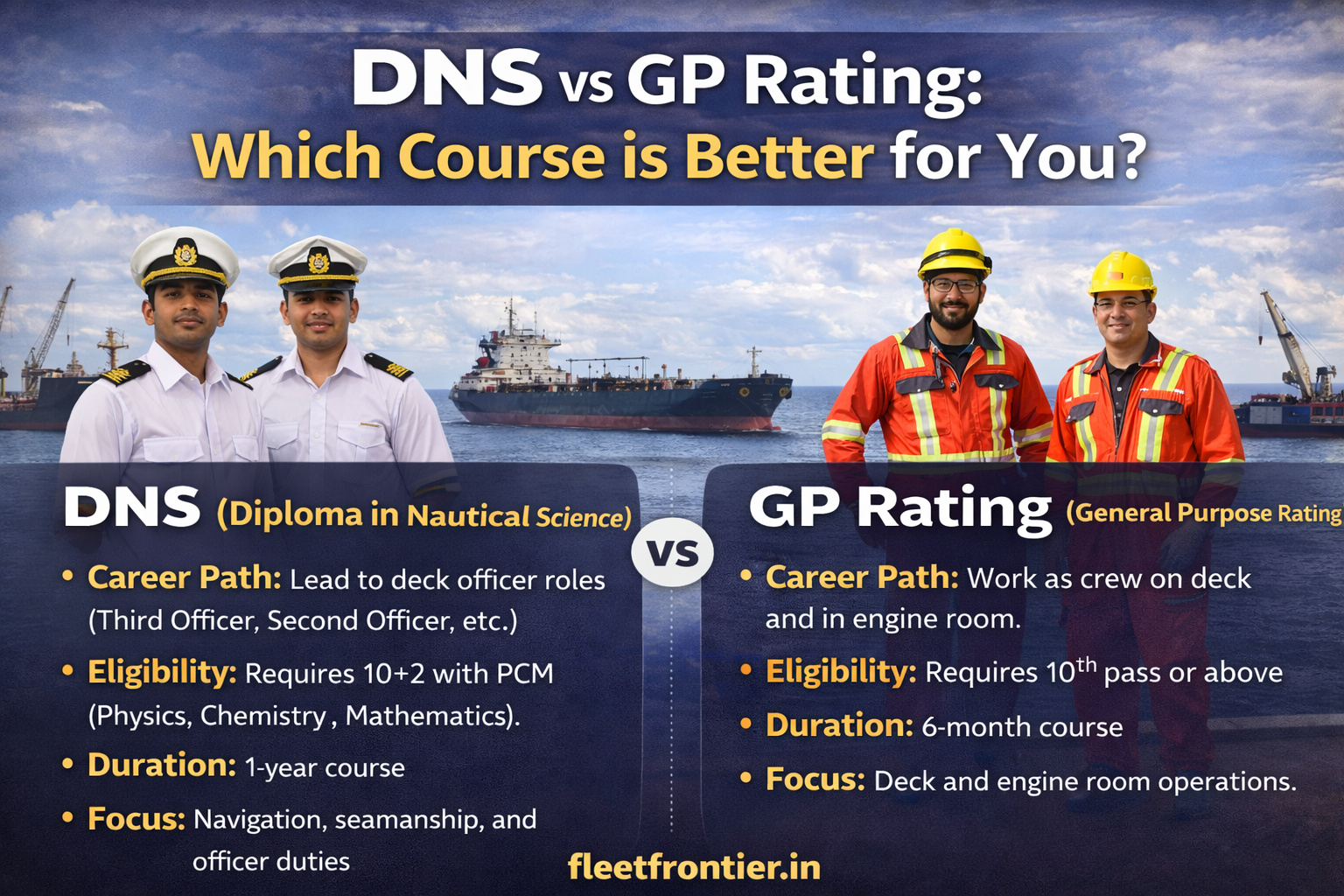
- DNS trains you to become a Deck Officer.
- GP Rating trains you to work as crew (ratings) in deck and engine departments.
Both are respectable. Both earn well. But they are not the same career ladder.
What Is DNS (Diploma in Nautical Science)?
DNS is a pre-sea training course designed for students who aim to become navigational officers.
Think of DNS as the pilot training program of the sea world.
Eligibility Criteria for DNS
- 10+2 with Physics, Chemistry, and Mathematics
- Minimum 60% aggregate (as per company rule)
- English: Minimum 50% (any one 10th or 12th)
- Age: Usually 17–25 years
- Medically fit as per maritime standards
DNS isn’t for shortcuts. It demands academic discipline and long-term commitment.
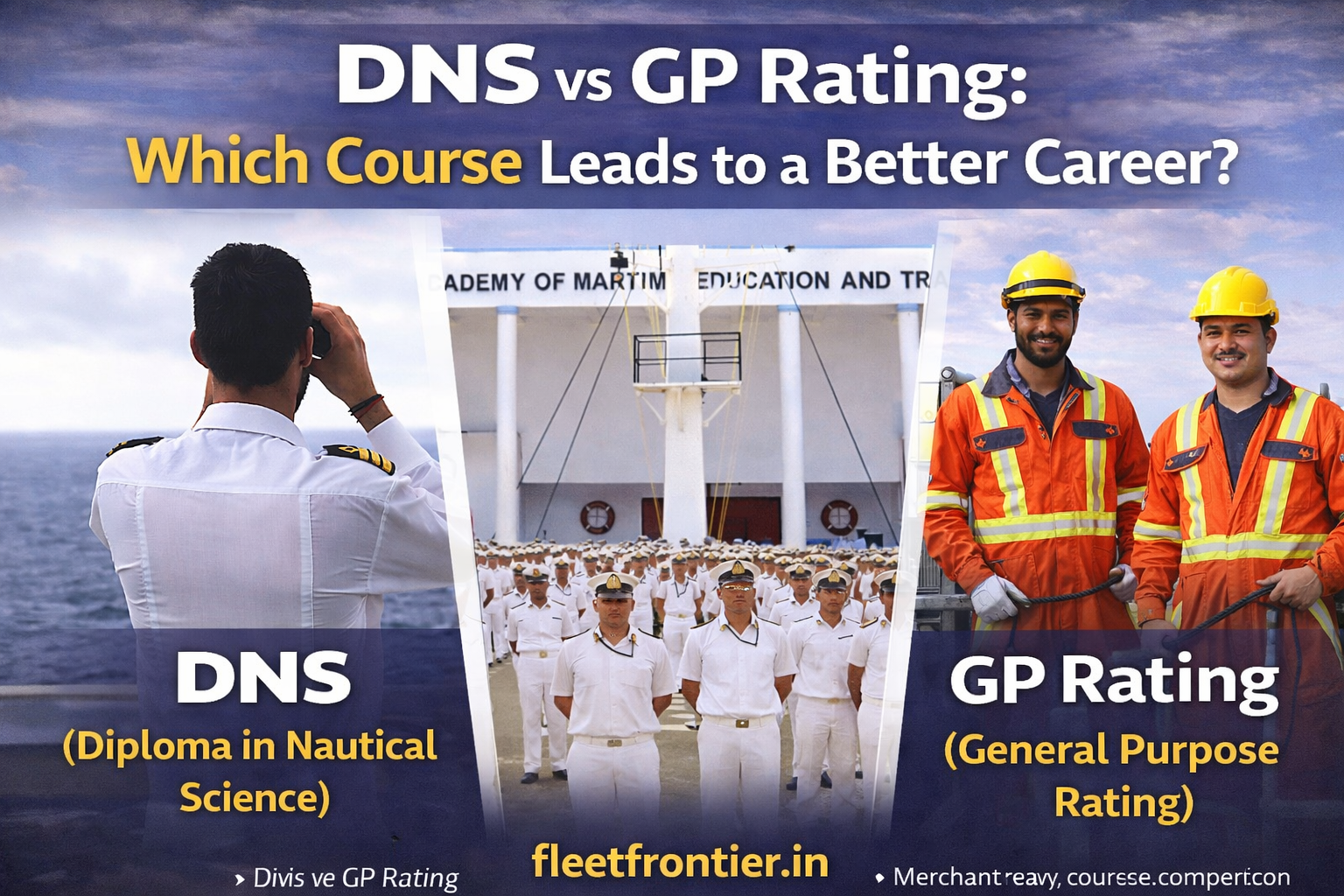
Career Path After DNS
- Deck Cadet
- Third Officer
- Second Officer
- Chief Officer
- Captain (Master Mariner)
Yes, Captain. The one who gives orders, not takes them.
What Is GP Rating?
GP Rating stands for General Purpose Rating. It combines deck crew and engine crew training.
If DNS is the management track, GP Rating is the hands-on technical workforce.
Eligibility Criteria for GP Rating
- Minimum 10th pass
- English as a subject
- Age: 17.5–25 years (some college 35 years)
- Medical fitness mandatory
Lower entry barrier, faster entry to sea.
Career Path After GP Rating
- Ordinary Seaman (OS)
- Able Seaman (AB)
- Bosun / Fitter
- Senior Rating Roles
You stay in the rating category, unless you later switch paths through exams and sea time.
DNS vs GP Rating: Core Differences Explained
Let’s not sugarcoat it.
- DNS = Officer Path
- GP Rating = Crew Path
One plans routes and manages safety. The other executes tasks and maintains operations.
Both are essential. Ships don’t run on ego—they run on teamwork.
DNS vs GP Rating Comparison Table
| Feature | DNS | GP Rating |
| Career Category | Officer | Rating (Crew) |
| Minimum Qualification | 10+2 (PCM) | 10th Pass |
| Course Duration | 1 Year | 6 Months |
| Entry Difficulty | High | Moderate |
| Starting Rank | Deck Cadet | OS / Wiper |
| Promotion Scope | Very High | Limited |
| Long-Term Salary | Very High | Moderate |
| Responsibility Level | Management & Navigation | Operations & Maintenance |
| Ideal For | Leadership-oriented students | Practical, hands-on workers |
This table alone answers half the confusion students have.
Salary Comparison: DNS vs GP Rating
Let’s talk money—because passion doesn’t pay EMI.
DNS Salary (Approx.)
- Deck Cadet: ₹40,000 – ₹80,000/month
- Third Officer: ₹2.5 – ₹3.5 lakh/month
- Captain: ₹9 – ₹12+ lakh/month
GP Rating Salary (Approx.)
- OS/Wiper: ₹35,000 – ₹60,000/month
- AB/Fitter: ₹80,000 – ₹1.2 lakh/month
DNS has a steeper growth curve. GP Rating offers quicker entry.
Job Roles & Responsibilities
DNS (Deck Officer)
- Navigation
- Watchkeeping
- Cargo operations
- Safety drills
- Leadership onboard
GP Rating
- Maintenance work
- Mooring operations
- Engine room assistance
- Cleaning and upkeep
- Support duties
One commands. One executes. Neither is inferior—but they are different.
Promotion & Career Growth
DNS promotions are structured and internationally recognized.
GP Rating promotions exist, but growth is slower and capped.
If you dream big—DNS fits better.
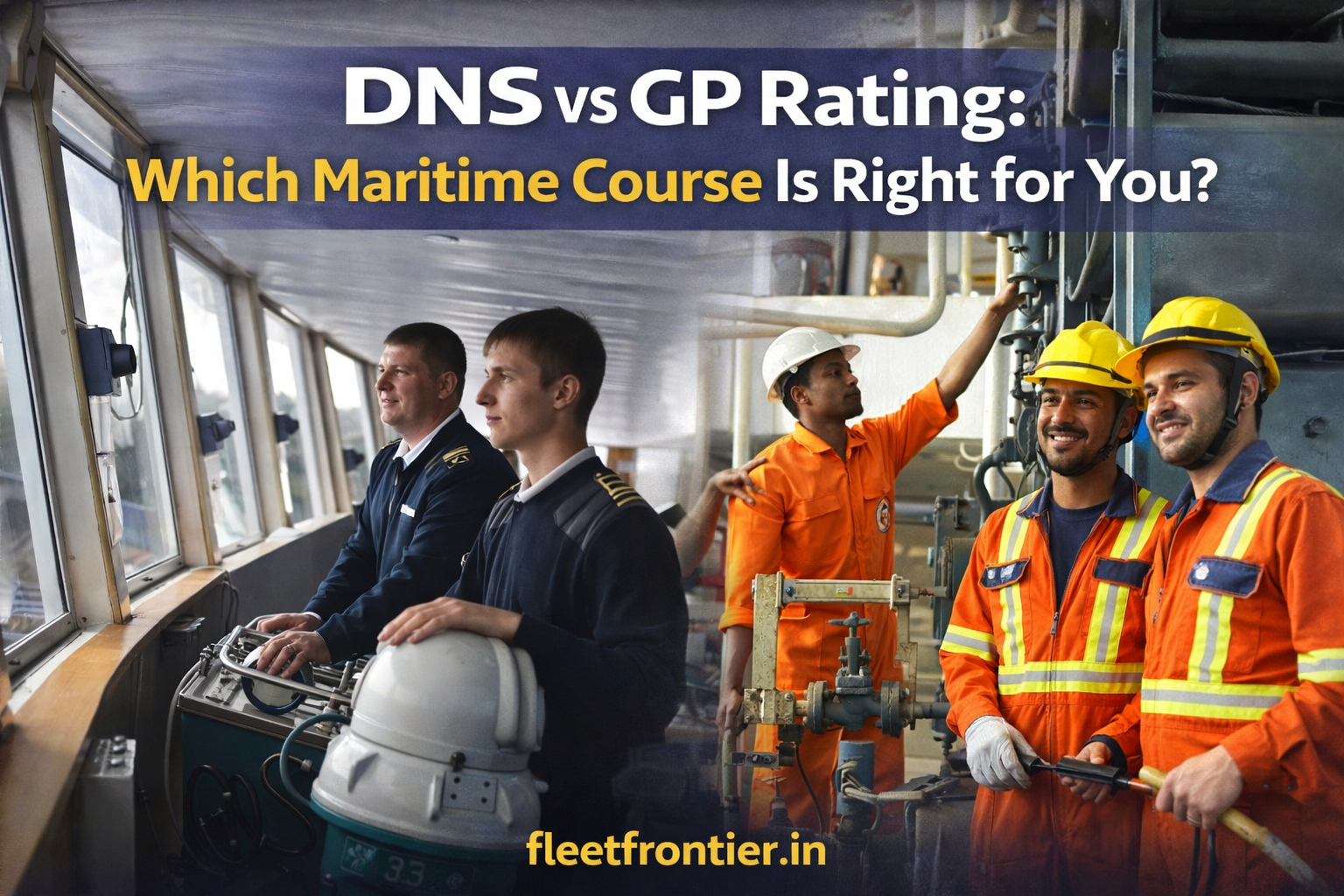
Cost, Duration, and ROI
- DNS: Higher course fees, higher long-term return
- GP Rating: Lower fees, faster job entry
Short-term vs long-term thinking. That’s the real decision.
Lifestyle Onboard: Officers vs Ratings
Officers enjoy:
- Better cabins
- More authority
- Decision-making power
Ratings enjoy:
- Physical work
- Fixed responsibilities
- Less paperwork stress
Choose based on personality, not peer pressure.
Which Course Is Better for You?
Choose DNS if:
- You’re academically strong
- You want leadership roles
- You think long-term
Choose GP Rating if:
- You want quick sea exposure
- You prefer hands-on work
- You don’t enjoy heavy academics
No wrong choice. Only wrong expectations.
Common Myths About DNS and GP Rating
- GP Rating has no future
- DNS guarantees a job without effort
- Ratings earn nothing
Truth? Effort, discipline, and consistency matter more than the course name.
Final Verdict
DNS vs GP Rating is not about which is better—it’s about which suits you.
DNS builds officers. GP Rating builds backbone crew. Ships need both to survive storms and schedules.
Choose wisely. The sea rewards clarity, not confusion.
Conclusion
The Merchant Navy offers one of the most rewarding careers, financially and professionally. But your starting course defines your journey. DNS offers leadership, long-term growth, and authority. GP Rating offers faster entry, practical exposure, and stability. Understand yourself before choosing. The ocean respects preparation.
FAQs
- Can GP Rating become an officer later?
Yes, but it requires additional exams, sea time, and effort. - Is DNS harder than GP Rating?
Academically, yes. Career-wise, both are demanding. - Which course has better salary growth?
DNS offers higher long-term earning potential. - Is sponsorship required for DNS?
Highly recommended, especially for smoother career progression. - Which is better for quick job placement?
GP Rating generally offers faster placement opportunities.