

Career Opportunities After Diploma in Nautical Science
Choosing a career at sea is not for everyone. It demands discipline, patience, and the ability to stay calm when the land is nowhere in sight. But for students who complete a Diploma in Nautical Science (DNS), the rewards often justify the effort. From structured career progression to global job opportunities, DNS opens doors that few other diplomas can.
This article explains career opportunities after Diploma in Nautical Science, covering job roles, salary trends, government and private sector options, overseas scope, and long-term growth—without hype and without fake promises.
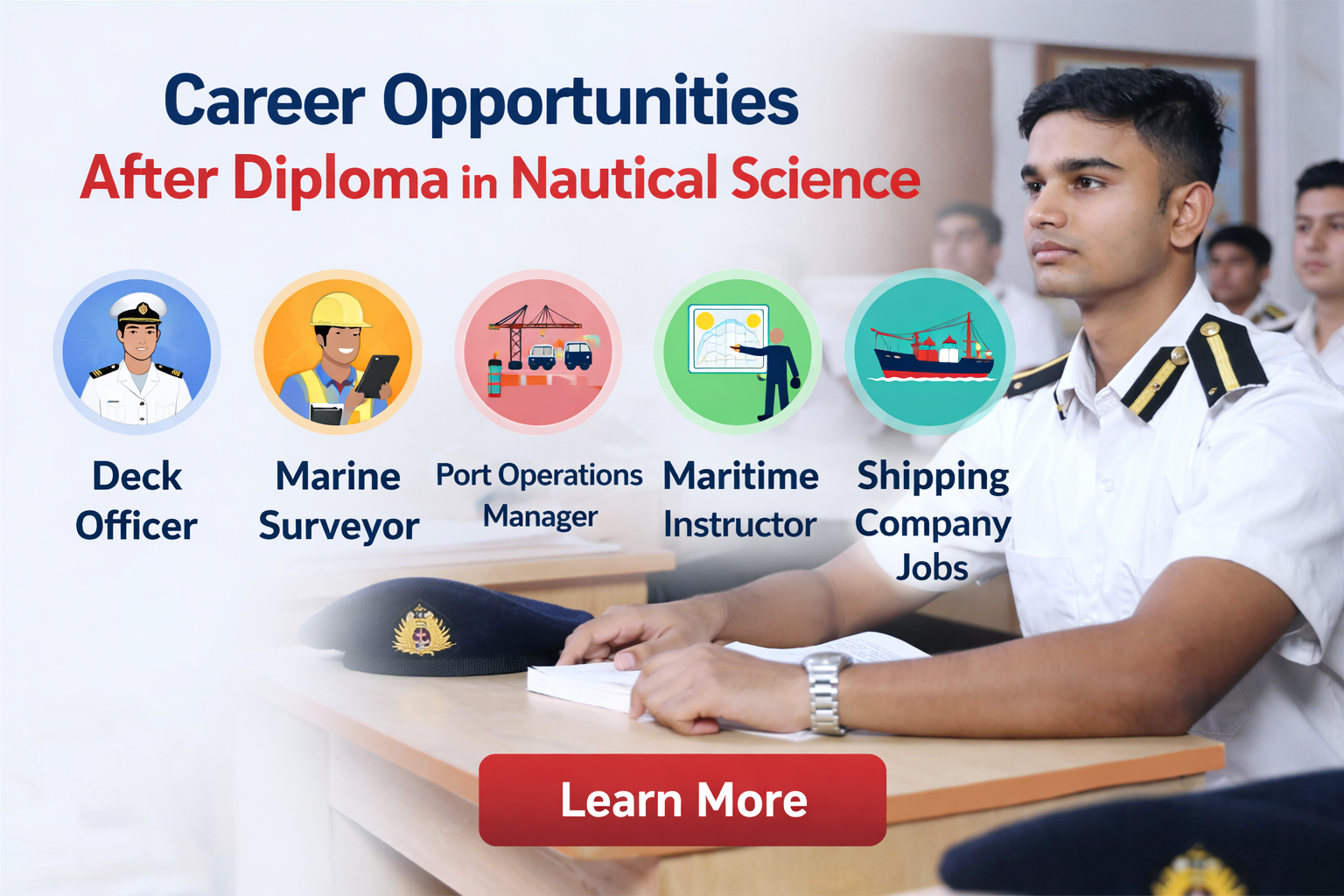
Why Diploma in Nautical Science Has Strong Career Value
The shipping industry runs on skilled officers, not shortcuts. DNS trains students specifically for deck officer roles through a combination of academic learning and onboard sea training. Unlike generic degrees, this diploma leads directly into a defined maritime career path.
The demand exists because:
- Global trade depends on ships
- International regulations require certified officers
- Experience at sea cannot be replaced by automation
In simple terms, ships still need humans who know what they are doing.
Career Prospects and Job Scope After Diploma in Nautical Science
Diploma in Nautical Science job opportunities exist across merchant shipping, port operations, logistics, and maritime administration. Graduates start at junior levels but grow steadily with sea time and certification.
During the DNS course, students gain practical knowledge of:
- Navigation and ship handling
- Safety management systems
- Cargo operations
- International maritime regulations
This makes them employable in both private and government maritime sectors.
Top Job Roles After Diploma in Nautical Science
Here are some of the most common and realistic job roles available after DNS:
Ship Captain (Long-Term Goal)
This is the destination, not the starting point. DNS cadets progress step-by-step through ranks before reaching Master Mariner.
Second Mate / Third Mate (Officer of the Watch)
Responsible for navigation, passage planning, and bridge watches. This is the first major promotion after cadetship.
Junior Navigation Analyst
Works with navigation planning, route optimization, and safety assessments, usually with shipping companies or maritime consultancies.
Shipment Officer
Handles cargo coordination, documentation, and compliance at ports or logistics hubs.
Apprentice / Deck Cadet
The entry-level onboard role where real learning begins. Every senior officer started here—no exceptions.
Areas of Recruitment for Diploma in Nautical Science Graduates
DNS graduates find employment in both private companies and government-linked organizations.
Private Sector Recruitment Areas
- Merchant Navy operations
- Ship management companies
- Cargo and logistics firms
- Port operations
- Marine safety and compliance teams
Government & Semi-Government Areas
- Directorate General of Shipping (indirect roles)
- Port Trusts
- Maritime training institutes
- Survey and inspection agencies
Marine professionals play a direct role in trade efficiency, safety, and national maritime infrastructure.
Salary Packages After Diploma in Nautical Science
Salary after Diploma in Nautical Science depends on rank, company, ship type, and experience. Entry-level pay looks modest, but growth is steep.
Average Salary (Private Sector)
(Sources: Glassdoor, PayScale)
| Job Role | Average Annual Salary |
| Deck Officer | INR 2 LPA |
| Nautical Surveyor | INR 6 LPA |
| Marine Superintendent | INR 15 LPA |
| Marine Engineer | INR 2 LPA |
A key reality: salary rises sharply after officer certification, not during cadetship.
Government Jobs After Diploma in Nautical Science
Government and PSU roles offer stability, regulated working hours, and long-term security.
Average Salary (Government Sector)
(Sources: PayScale, Glassdoor)
| Job Role | Annual Salary |
| Deck Officer | INR 1 LPA |
| Nautical Surveyor | INR 4 LPA |
| Marine Superintendent | INR 10 LPA |
| Marine Engineer | INR 1.5 LPA |
Government salaries grow slower but provide consistent career progression and pension benefits.
Private Jobs for Diploma in Nautical Science Graduates
The private sector remains the primary employer for DNS graduates. Ship management companies value certified officers with real sea experience.
Private Sector Salary Range
- Entry level: INR 2–4 LPA
- Mid-career officers: INR 8–15 LPA
- Senior management roles: INR 20+ LPA
Performance, discipline, and safety records matter more than academic scores after a point.
Job Opportunities Abroad After Diploma in Nautical Science
DNS graduates often work on foreign-flag vessels, which naturally opens international opportunities.
Why Overseas Demand Exists
- Global officer shortage
- English-language training advantage
- STCW-compliant Indian certification
Many Indian officers receive overseas postings through multinational ship managers.
Top Companies Hiring DNS Graduates
Some of the well-known recruiters include:
- Anglo-Eastern Ship Management
- Shipping Corporation of India
- Barber Ship Management
- Wallem Ship Management
- Torm Shipping
These companies focus heavily on safety records and onboard performance.
Best Countries for Diploma in Nautical Science Careers
DNS graduates find strong demand in:
- India
- United States
- Canada
- Australia
- New Zealand
- Japan
- France
- China
Most roles involve international sailing, even when employed by domestic companies.
Career Designations Abroad for DNS Graduates
Common overseas job profiles include:
- Chief Navigation Officer
- Nautical Operations Controller
- Merchant Navy Operations Manager
- Maintenance Officer
- Cargo and Shipment Manager
With experience, shore-based maritime roles also become accessible.

Long-Term Career Growth After DNS
DNS is not a “quick money” course. It is a long-term professional pathway.
Career progression usually follows:
- Deck Cadet
- Third Officer
- Second Officer
- Chief Officer
- Master (Captain)
Each promotion requires sea time, exams, and competence—not shortcuts.
Well-Known Maritime Leaders with Nautical Background
Many senior naval and maritime leaders began their careers through nautical training, including:
- Admiral Karambir Singh
- Admiral Michael M. Gilday
- Vice Admiral Katari
- Major Stringer Lawrence
Their careers reflect what structured maritime education can achieve over time.
Admission 2025: Why Career Planning Matters Early
Students planning DNS admission in 2025 should understand that success depends on:
- Choosing DG Shipping-approved institutes
- Securing company sponsorship
- Maintaining discipline during sea training
The career rewards favour those who treat the profession seriously.
Is Diploma in Nautical Science Worth It?
If you expect instant luxury, DNS will disappoint you.
If you want global exposure, structured growth, and long-term financial stability, DNS makes strong sense.
The sea tests patience, but it rewards skill.
Final Thoughts
Career opportunities after Diploma in Nautical Science are real, structured, and globally relevant. Jobs exist in both private and government sectors, salaries grow with certification, and overseas opportunities expand with experience.
DNS is not just a diploma.
It is an entry point into a profession where responsibility, safety, and leadership matter more than shortcuts.