

What Is DNS Course in Merchant Navy? Eligibility, Fees, Duration and Career Scope


If you have completed Class 12 with Physics, Chemistry and Mathematics (PCM) and dream of becoming a Merchant Navy officer, the Diploma in Nautical Science (DNS) course is one of the pathways you can consider.
DNS is a pre-sea training program designed for students who want to build a career in the deck department of merchant ships. It introduces cadets to navigation, seamanship, ship operations, cargo handling, maritime safety and other essential subjects.
After completing the pre-sea course, candidates undertake structured onboard training. They then complete the required academic and professional assessments to progress towards the relevant Certificate of Competency (CoC) as a deck officer.
In this guide, you will learn what the DNS course is, its eligibility criteria, admission process, duration, fees, subjects, career opportunities and important things to check before joining a maritime institute.
What Is DNS Course?
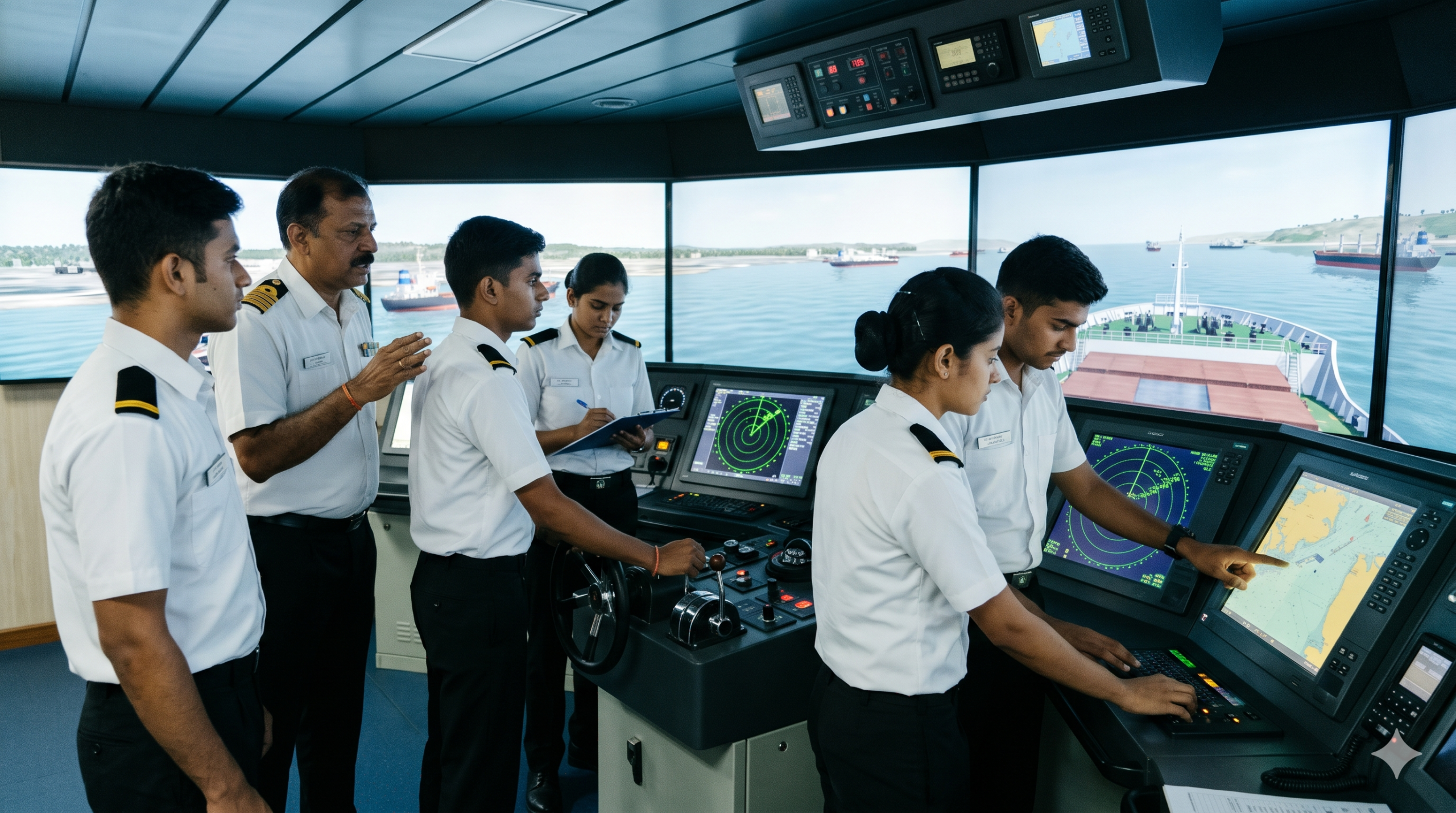
DNS stands for Diploma in Nautical Science. It is a maritime training programme for students who want to become Deck Officers in the Merchant Navy.
The course prepares students for the responsibilities of working in a ship’s deck department. Deck officers are involved in navigation, watchkeeping, cargo operations, ship safety, communication and the overall operation of the vessel.
In India, the DNS pathway is conducted under the applicable requirements of the Indian Maritime University (IMU) and the Directorate General of Shipping (DG Shipping).
The programme generally includes:
One year of residential pre-sea training.
Structured shipboard training after the pre-sea phase.
Further academic assessments and professional training.
Preparation for the relevant Certificate of Competency examinations.
The DNS pathway can lead to a career as a Deck Officer and, with the required sea service, examinations and experience, progression towards Chief Officer and Captain.
DNS Course Full Form
The full form of DNS is Diploma in Nautical Science.
It is a professional maritime programme focused on navigation and ship operations. It is different from Marine Engineering, which prepares students for careers in the engine department.
What Is the Duration of the DNS Course?
The DNS pathway is not limited to the one-year pre-sea course.
A commonly followed structure is:
Training stage
Approximate duration
Pre-sea training at a maritime institute
12 months
Structured shipboard training
18 months
Further post-sea training and examinations
As prescribed
The one-year pre-sea phase generally consists of two semesters. After successfully completing it, cadets proceed to the prescribed onboard training programme.
The exact academic and certification sequence must be checked against the current IMU programme and DG Shipping requirements.
DNS Course Eligibility Criteria
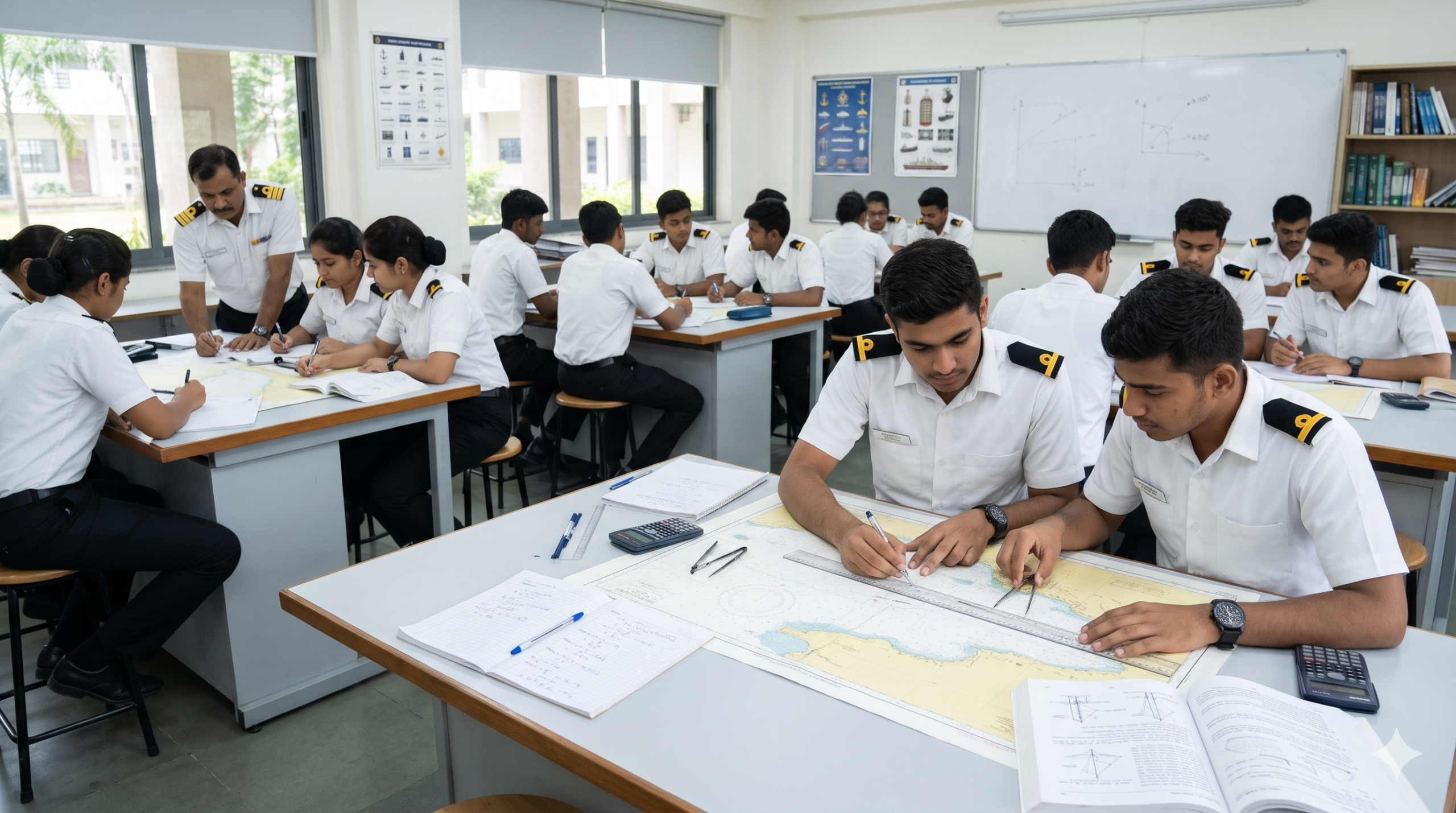
Students should check the latest eligibility rules before applying because requirements may vary according to the admission route, institute and sponsoring company.
1. Educational qualification
The usual academic route is:
Pass Class 12 from a recognised board.
Physics, Chemistry and Mathematics as compulsory subjects.
Minimum 60% aggregate in PCM under the commonly prescribed eligibility framework.
Minimum 50% marks in English in Class 10 or Class 12, as applicable.
Always verify the current admission prospectus and the specific institute’s requirements before applying.
2. Age limit
The age limit is governed by the applicable admission rules and may differ according to the candidate category and admission route.
Some shipping companies and institutes may also have stricter age requirements during their sponsorship selection.
Do not assume that every DNS institute follows the same age limit. Confirm the applicable age calculation date and relaxation rules for your admission batch.
3. Medical fitness
Candidates must meet the medical fitness standards applicable to seafarers.
Medical assessment can include:
Eyesight examination.
Colour vision test.
Hearing assessment.
General physical fitness.
Medical history and other prescribed examinations.
Candidates should undergo the required examination through a DG Shipping-approved medical practitioner. Do not take admission based only on an informal medical opinion.
4. English language ability
English is important in the Merchant Navy because it is widely used for maritime communication, documentation, safety procedures and shipboard operations.
Candidates must satisfy the prescribed English marks requirement and should develop good spoken and written communication skills.
Is IMU-CET Mandatory for DNS?
IMU-CET is an important part of the DNS admission process.
According to IMU’s 2026–27 admission information, candidates seeking admission to DNS programmes must qualify in IMU-CET. However, the admission process differs between IMU campuses and affiliated institutes.
For affiliated institutes, DNS admissions may be restricted to candidates sponsored by shipping companies. Therefore, candidates should check whether the institute requires company sponsorship before applying.
Do not confuse qualifying in IMU-CET with receiving a sponsorship. They are separate parts of the selection and admission process.
What Is DNS Sponsorship in Merchant Navy?
DNS sponsorship means that a shipping company selects a candidate for a training pathway associated with its shipboard training arrangements.
Depending on the company and institute, the selection process may include:
Application and document screening.
Written or computer-based examination.
Personal interview.
Psychometric assessment.
Medical examination by an approved doctor.
Confirmation of sponsorship and admission, subject to applicable requirements.
Sponsorship is important because the DNS pathway includes onboard training. Candidates should understand exactly what the company is offering before paying any fees.
Important: A sponsorship letter should be genuine and verifiable. Confirm the company, institute, course approval, shipboard training arrangements and written terms directly with the relevant organisations.
DNS Course Admission Process
The admission process can differ from one institute to another, but the general steps are:
Step 1: Check eligibility
Confirm your PCM marks, English marks, age and medical eligibility.
Step 2: Register for IMU-CET
Check the current IMU admission notification and complete the entrance examination registration as required.
Step 3: Apply to shipping companies and institutes
Research the available DNS programmes and their sponsorship arrangements. Apply only through official channels.
Step 4: Attend selection tests and interviews
Some companies conduct written tests, interviews and psychometric assessments.
Step 5: Complete the medical examination
Attend the required medical assessment through a DG Shipping-approved doctor.
Step 6: Confirm admission
Before paying fees, verify your admission confirmation, sponsorship documents, institute approval and onboard training arrangements.
What Subjects Are Taught in DNS?

The DNS programme focuses on the knowledge and practical skills needed by a future Deck Officer.
Common subject areas include:
1. Navigation
Students learn the fundamentals of planning and monitoring a ship’s voyage, including charts, navigational equipment and position fixing.
2. Seamanship
Seamanship covers practical shipboard skills such as ropes, knots, anchoring, mooring, ship handling and deck operations.
3. Ship Stability
Students study how weight distribution, buoyancy and loading conditions affect a ship’s stability.
4. Cargo Handling
This subject introduces cargo operations, cargo planning, loading, discharging and safe cargo handling practices.
5. Maritime Law
Students learn about maritime regulations, international conventions and the legal responsibilities associated with ship operations.
6. Maritime Safety
Safety training covers emergency response, fire prevention, lifesaving appliances, personal safety and pollution prevention.
7. Meteorology
Students learn about weather systems, wind, waves, pressure patterns and how weather conditions affect navigation.
8. Communication
Effective communication is essential onboard. Cadets learn maritime terminology, standard communication practices and professional reporting.
The exact syllabus and semester-wise subjects should be checked with the relevant institute and IMU curriculum.
What Happens After Completing the DNS Course?
After completing the pre-sea phase, a cadet proceeds to the prescribed structured shipboard training.
A simplified view of the pathway is:
Class 12 PCM → IMU-CET and applicable selection → DNS pre-sea training → Shipboard training as a Deck Cadet → Further academic and professional requirements → Second Mate Certificate of Competency pathway → Deck Officer career
The exact sequence of examinations, training courses, sea service and certification is governed by the applicable IMU and DG Shipping requirements.
Completing the one-year DNS course alone does not make a candidate a Second Officer. The candidate must complete the remaining training, sea-service and certification requirements.
Career Opportunities After DNS
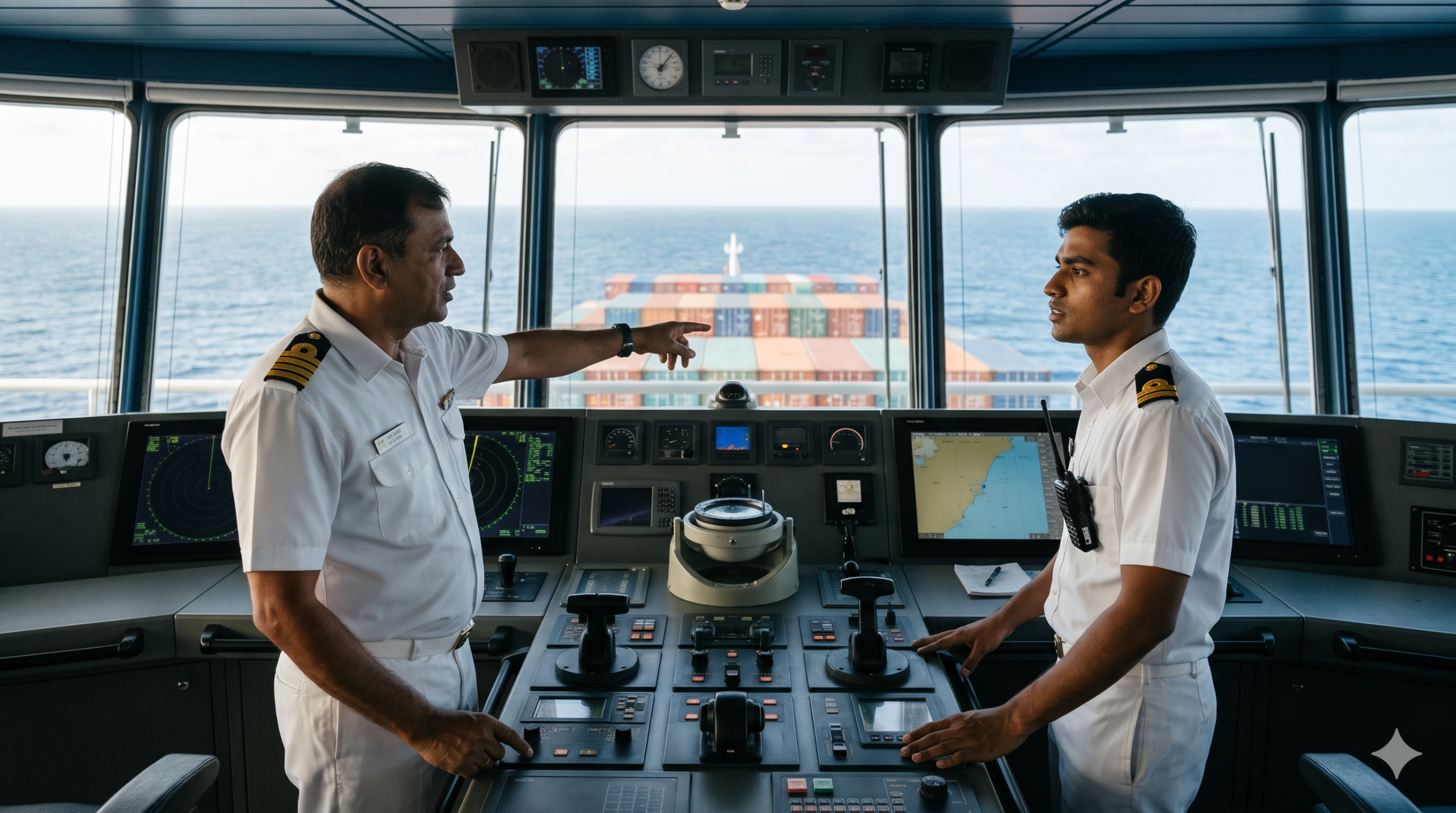
DNS is a pathway towards a career in the deck department of merchant ships.
A typical career progression is:
1. Deck Cadet
A Deck Cadet is a trainee officer who learns practical navigation, watchkeeping, cargo operations, safety procedures and other deck duties under supervision.
2. Third Officer
After obtaining the required certification and meeting the applicable employment requirements, a candidate may work as a Third Officer. Duties can include navigational watchkeeping and safety-related responsibilities.
3. Second Officer
The Second Officer commonly has responsibilities related to navigation, passage planning and navigational publications, in addition to watchkeeping duties.
4. Chief Officer
The Chief Officer is the senior deck officer responsible for major deck operations, cargo work, stability and supervision of deck personnel, under the authority of the Master.
5. Captain or Master
The Master is in overall command of the vessel and is responsible for its safe operation, crew, cargo and compliance with applicable regulations.
Promotion depends on approved sea service, competency examinations, professional training, experience and the requirements in force at the time.
DNS Course Fees in India
The cost of a DNS programme varies between institutes and admission batches.
The total amount may include:
Tuition and training fees.
Hostel and accommodation charges.
Food and mess charges.
Uniforms and training equipment.
Medical examination expenses.
Examination and registration fees.
Other institute-specific charges.
For example, the Shipping Corporation of India training institute has published batch-specific DNS fee information. Its published fee should not be treated as the standard fee for every maritime institute.
Before taking admission, request a written fee breakdown and confirm whether the amount includes accommodation, meals, uniforms, examinations and other expenses.
Also ask about refund conditions if sponsorship or shipboard placement does not proceed as expected.
Best DNS Colleges in India
Do not select a DNS institute only because it advertises placements or has an attractive campus.
Before choosing an institute, verify:
Whether the institute is currently approved by DG Shipping for the relevant course.
Its current IMU affiliation or applicable academic arrangement.
Whether the specific DNS batch has valid approval.
Whether sponsorship is compulsory for that admission route.
The company’s actual shipboard training arrangement.
The institute’s training facilities and simulator access.
The complete fee structure and refund policy.
The official placement and onboard training record.
Some organisations with published DNS programme information include:
Indian Maritime University and its relevant campuses or affiliated institutions.
Anglo-Eastern Maritime Academy.
International Maritime Institute.
Shipping Corporation of India training institute.
This is a list of organisations with publicly available programme information, not a ranking or a guarantee of current seats. Verify the latest approval and admission status before applying.
Difference Between DNS and B.Sc. Nautical Science
Both DNS and B.Sc. Nautical Science are pathways for students interested in becoming Deck Officers, but their academic structures differ.
Feature
DNS pathway
B.Sc. Nautical Science
Initial programme
Diploma in Nautical Science
Bachelor of Science
Pre-sea academic phase
Generally 1 year
Generally 3 years
Shipboard training
Included in the prescribed DNS pathway
Follows the applicable programme structure
Career direction
Deck Officer
Deck Officer
Admission
IMU-CET and applicable sponsorship/admission rules
IMU-CET and applicable admission rules
The best option depends on your eligibility, preferred academic structure, sponsorship availability and long-term career plans.
Advantages of the DNS Course
Some important advantages of the DNS pathway are:
It provides a structured route towards a Deck Officer career.
The initial pre-sea phase is relatively short.
It combines classroom learning with shipboard training.
Students gain practical exposure to navigation and ship operations.
It can lead to internationally recognised professional certification when all applicable requirements are completed.
Challenges of Choosing DNS
Students should also understand the challenges before joining.
Life at sea can involve long periods away from family.
Shipboard work requires discipline and responsibility.
Training and examinations require consistent effort.
Medical fitness standards must be maintained.
Shipboard training depends on the approved training arrangement.
A diploma by itself does not guarantee a job or an officer’s Certificate of Competency.
Is DNS a Good Course for the Merchant Navy?
DNS can be a suitable option for students who want to become Deck Officers and are interested in navigation, ship operations and life at sea.
However, it is important to understand the complete pathway before enrolling. Students should verify eligibility, sponsorship, institute approval, shipboard training arrangements, total fees and certification requirements.
A well-informed admission decision can help avoid problems later in the training process.
Frequently Asked Questions About DNS Course
1. What is the full form of DNS?
DNS stands for Diploma in Nautical Science. It is a maritime training programme for students pursuing a career as Deck Officers in the Merchant Navy.
2. Can I join the DNS course after 12th?
Yes. Students who have completed Class 12 with Physics, Chemistry and Mathematics can apply if they satisfy the applicable academic, age, medical and admission requirements.
3. Is DNS a one-year course?
The pre-sea training phase is generally one year. However, the complete DNS pathway also includes structured shipboard training and further academic and professional requirements.
4. Is IMU-CET compulsory for DNS?
IMU’s admission information requires candidates to qualify in IMU-CET for DNS admission. Candidates should check the current prospectus and the admission route of their chosen institute.
5. Is sponsorship compulsory for DNS?
For DNS admissions through affiliated institutes, sponsorship by a shipping company may be compulsory. The exact admission rules depend on the current IMU notification and institute.
6. What is the salary after DNS?
There is no fixed salary immediately after completing the DNS pre-sea course. Earnings depend on the candidate’s employment, rank, company, vessel type, contract and experience. A cadet’s pay is different from that of a qualified officer.
7. Can I become a Captain after DNS?
Yes. DNS can be a route towards becoming a Captain or Master. However, promotion requires the prescribed sea service, training, competency examinations, certification and professional experience.
8. Is DNS better than B.Sc. Nautical Science?
Neither course is automatically better for every student. Both can lead towards a Deck Officer career. Compare their duration, academic structure, sponsorship requirements, fees and training arrangements before deciding.
9. Can a DNS cadet work on any ship?
Shipboard employment and the type of vessel a cadet can join depend on the sponsoring company, training arrangement, vessel availability and applicable certification requirements.
10. Does completing DNS guarantee a Merchant Navy job?
No. Admission to a course does not automatically guarantee employment. Candidates should verify the sponsorship terms and written shipboard training arrangements before joining.
Conclusion
The Diploma in Nautical Science (DNS) is an important entry pathway for students who want to build a career as Deck Officers in the Merchant Navy.
The program combines pre-sea maritime education with structured onboard training and further professional certification requirements. It provides a foundation in navigation, seamanship, cargo handling, ship stability and maritime safety.
Before joining, check the latest IMU admission notification, DG Shipping approval, sponsorship conditions, medical standards and complete fee structure. Choosing the right training pathway is an important first step towards a successful career at sea.
For more Merchant Navy course guides, career information and seafarer resources, keep following Fleet Frontier.